Seven Solar Storms, Ranked by How Much You Should Actually Worry About Them
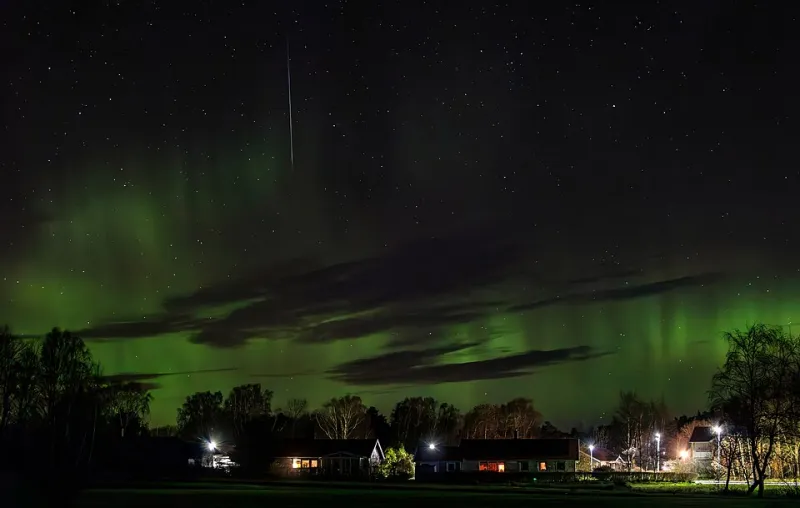
Photo: W.carter, CC BY-SA 4.0, via Wikimedia Commons
Every space weather article eventually name-drops the same event: 1859, telegraphs sparking, auroras over Cuba, the dreaded Carrington Event. And look — it was genuinely bad. But somewhere along the way, "worst storm ever recorded" turned into "storm that will end civilization," and the actual data got buried under the folklore.
So we did something slightly unfair: we ranked seven famous solar events on what the measurements actually show, not what the retellings claim. Grades are based on geomagnetic disturbance, physical scale, and how badly it would hurt a modern power grid. Disagreements welcome in the comments.
1. The May 1921 Storm — The Real Record Holder
The storm everyone forgets. Geomagnetic readings from May 1921 are, by several measures, more extreme than 1859 — and this one happened in the telegraph-and-rail era, so we have documentation of real infrastructure damage: fires in telegraph exchanges, a railroad control tower burned in Sweden, fuses blown across the Northeast. It hit during solar cycle 15, a cycle that was otherwise pretty unremarkable. Grade: A+. The scariest storm is the one that outperforms its own solar cycle.
2. The Carrington Event, 1859 — Legendary, and It Earned It
Fine. The hype is mostly deserved. British astronomer Richard Carrington watched a flare in progress; eighteen hours later, Earth's magnetic field went haywire, auroras reached the Caribbean, and telegraph operators disconnected their batteries and ran on auroral current alone. The estimated Dst index — a measure of geomagnetic disturbance — sits somewhere between -800 and -1,750 nT depending on who's reconstructing it, which is a genuinely enormous range that tells you how shaky pre-modern data is. Grade: A. Mythology and measurement actually agree here.
3. March 1989 — The One That Actually Broke Stuff in America
The Carrington Event never knocked out a power grid. This one did. Hydro-Québec lost power to about six million people in under ninety seconds when the storm tripped protective systems, and the same storm warped satellites, disrupted shortwave radio, and cracked a transformer at a New Jersey nuclear plant's generating unit. For US readers, this is the most relevant event on the list — it's the template regulators actually plan around. Grade: A-.
4. The July 2012 Near Miss — The Storm That Didn't Happen
A Carrington-class CME erupted from the Sun in July 2012 and crossed Earth's orbit... where we'd been nine days earlier. If the timing had flipped, we'd be telling a different story. NASA modeled the consequences; the White House subsequently issued national strategy documents. The problem: "the disaster that didn't happen" doesn't move the needle emotionally, which is exactly why grid hardening keeps getting deferred. Grade: Incomplete — and that's the point.
5. The Halloween Storms, 2003 — Overhyped, Still Ugly
The most-satellite-damaged event on record, with auroras seen as far south as Texas, and a sensor on a NASA instrument literally maxed out. But the grid impacts were modest, and most people's "memory" of it is secondhand. Grade: B+. A monster by instrument standards, a nuisance by human ones.
6. The 1972 Solar Particle Storm — The Dark Horse
Barely a blip in the public imagination, but the August 1972 event produced the fastest CME transit ever observed — Sun to Earth in about 14.6 hours — and knocked out mines in Vietnam by setting off magnetic detectors. It's the event that rewrote how we think about radiation dose for astronauts. Grade: B. Niche, but consequential.
7. The 2024 Gannon Storm — The Modern Reality Check
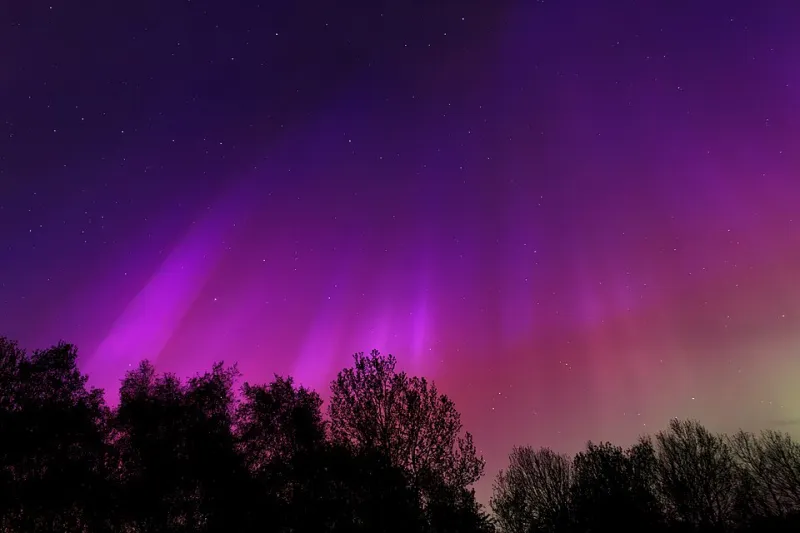
May 2024 gave us the strongest geomagnetic storm in two decades, visible auroras from Florida to Arizona, and... mostly pretty drone photos. Modern grid operators managed it. That's not a reason for complacency — it's proof that forecasting, warning, and load management work. Grade: B-, and we mean that as a compliment to the system, not the storm.
The Takeaway
The storms that should scare you aren't the famous ones. They're the fast ones, the ones that hit during quiet cycles, and the ones we caught by luck instead of forecast. Sleep on 1921 for a while.