What a 19th-Century Solar Catastrophe Still Owes Modern Power Grids
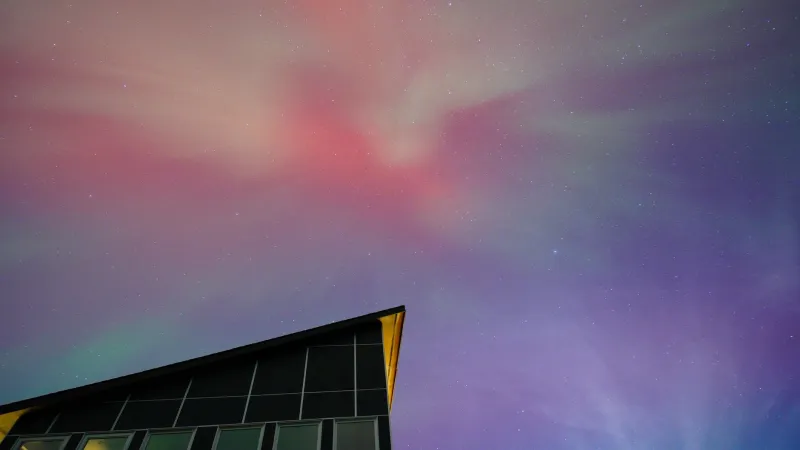
In September 1859, telegraph operators across North America and Europe started getting sparks. Literal sparks — jumping from their equipment, setting paper on fire, delivering shocks to startled hands. Some operators disconnected their batteries entirely and found the lines still worked, powered by nothing but the aurora overhead. It was beautiful, terrifying, and, in the grand scheme of things, almost harmless.
That last part is what keeps engineers up at night.
The Carrington Event — named after British astronomer Richard Carrington, who observed the solar flare that triggered it — remains the most powerful geomagnetic storm in recorded history. And the only reason it didn't collapse civilization is that civilization, in 1859, barely had any electrical infrastructure to collapse.
We don't have that luxury anymore.
The Storm That Set the Benchmark
Carrington's flare launched a coronal mass ejection so energetic it reached Earth in about 17 hours — less than half the transit time of a typical CME. When it hit, it compressed Earth's magnetosphere dramatically, inducing geomagnetic currents strong enough to overwhelm the modest electrical systems of the era.
Telegraph networks went haywire across the US, Canada, and Europe. Auroras were spotted as far south as Cuba and Hawaii. Gold miners in the Rocky Mountains reportedly woke up thinking it was dawn — at 1 a.m.
Now imagine that same storm hitting today.
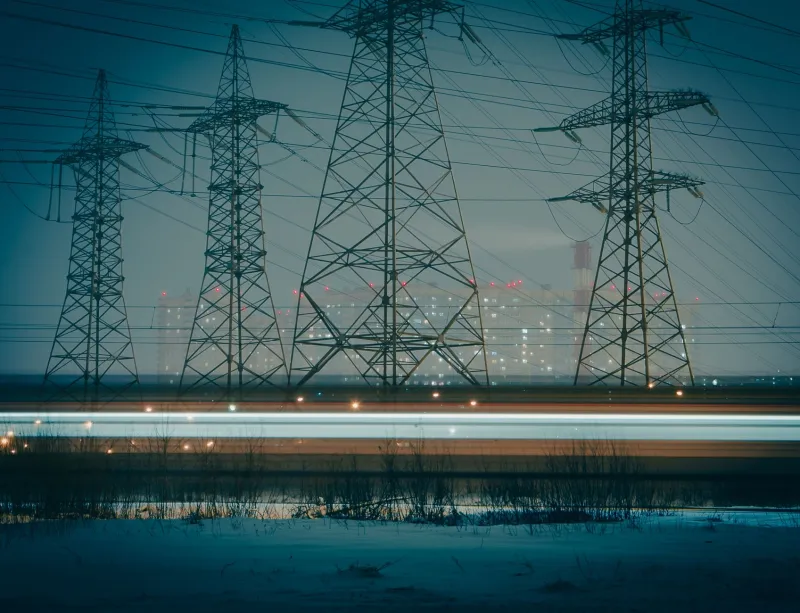
Modern power grids are, in a very real sense, enormous antennas. High-voltage transmission lines stretch for hundreds of miles, and when geomagnetically induced currents (GICs) flow through them, transformers — the critical, multi-ton devices that step voltage up and down across the grid — can saturate magnetically and fail. Some can fail permanently. And these aren't components you swap out from a warehouse. Large custom transformers can take 12 to 18 months to manufacture and deliver under normal conditions.
A 2008 National Academy of Sciences report estimated that a Carrington-scale event could knock out power for 130 million Americans for months to years. The economic damage: upward of $2 trillion in the first year alone.
Why Old Storms Still Drive Modern Risk Models
Here's the uncomfortable truth about space weather forecasting: our instrumental record is short. Continuous, reliable satellite-based solar monitoring has only existed since the 1970s. Before that, we're piecing things together from ground-based magnetometer readings, historical accounts, and proxy data like ice cores and tree rings.
That means the Carrington Event, the 1921 New York Railroad Storm, and the 1989 Quebec Blackout aren't just historical footnotes. They're anchor points — the extreme end of a dataset we're still trying to fill in.
The 1921 storm, for example, is often overlooked despite being nearly as intense as Carrington. It knocked out telegraph and telephone service across the northeastern US and caused a fire at the New York Central Railroad control center in Manhattan. Had it occurred 70 years later, the outcome would have been radically different.
Researchers use these historical events to calibrate what's called a "100-year storm" or "1-in-1000-year storm" probability — essentially, statistical estimates of how often an event of a given magnitude might occur. The problem is that with only about 160 years of reasonably documented solar storm history, those probabilities carry enormous uncertainty.
Recent work analyzing cosmogenic isotopes — specifically beryllium-10 and carbon-14 deposited in ice cores and tree rings — has pushed the timeline back further. Studies have identified what appear to be extreme solar particle events around 775 AD and 993 AD that may have dwarfed even Carrington. If those events involved accompanying geomagnetic storms of similar scale, our worst-case planning scenarios might still be too conservative.
The Analog-to-Digital Problem
There's a concept in risk assessment sometimes called the "analog-to-digital" problem, and it's particularly brutal when applied to space weather. The societies that actually experienced the most severe solar storms on record were analog societies. They had no semiconductor chips, no internet backbone, no GPS-dependent supply chains, no just-in-time hospital equipment.
When the 1859 storm hit, it disrupted communications and startled a lot of people. When the 1921 storm hit, it disrupted more sophisticated communications and caused some fires. Each successive storm found a slightly more electrified civilization — and caused proportionally more damage.
We are now orders of magnitude more electrified than 1921, and the extrapolation is not comforting.
The challenge for modern engineers isn't just "how do we protect our grid from a Carrington Event?" It's "how do we even model the cascading failures that would result, given that we've never actually tested a fully modern grid against anything close to that level of geomagnetic forcing?"
Satellites would be at risk. GPS signals, which are now embedded in everything from financial transaction timestamps to agricultural equipment, could be disrupted for days. High-frequency radio communications — still used by aviation and emergency services — would likely go dark. And the power grid failures would cascade into failures of water treatment, fuel pumping, hospital backup systems, and supply chains in ways that are genuinely difficult to fully model.
What's Actually Being Done
The good news, such as it is: this isn't being ignored. The Federal Energy Regulatory Commission (FERC) issued Order 830 in 2016, requiring US power utilities to develop and implement geomagnetic disturbance (GMD) mitigation plans. NERC — the North American Electric Reliability Corporation — has been developing standards and conducting vulnerability assessments across the grid.
Some utilities have installed neutral blocking devices on transformers — essentially, hardware that prevents DC-like geomagnetically induced currents from saturating transformer cores. Others have developed operational procedures: pre-positioning spare transformers, pre-staging response crews, and establishing protocols for controlled load shedding to protect equipment when a major storm is detected.
NASA and NOAA continue to operate and improve their space weather monitoring infrastructure. The DSCOVR satellite at the L1 Lagrange point gives about 15 to 60 minutes of warning before a CME's magnetic field orientation becomes measurable — and that orientation (specifically, whether it points southward) largely determines how severe the geomagnetic impact will be.
Fifteen to sixty minutes is not a lot of time to prepare a continental power grid. But it's something.
There are also longer-range efforts. Researchers are working to improve CME arrival time predictions from days out, and to better model the internal magnetic structure of CMEs before they reach Earth. The more warning time operators have, the more options they have.
The Sun Doesn't Forget — And Neither Should We
The Carrington Event is 165 years in the rearview mirror. The people it affected are long gone. The infrastructure it damaged was rebuilt and replaced many times over. But the physics that produced it hasn't changed. The Sun still has active regions, still builds up magnetic stress, still occasionally releases it in spectacular and violent fashion.
The storm is coming again. Not necessarily next year, not necessarily this solar cycle — but eventually, with something approaching certainty. The only real variable is whether civilization will be ready when it does.
The Carrington Event's legacy isn't just a cautionary tale. It's a specification document. And we're still in the middle of writing our response to it.