Let's Retire 'Space Weather' Before the Next Big Solar Storm
Photo: HighVoltage 5576, CC0, via Wikimedia Commons
Quick: when you hear 'space weather,' what do you picture? Probably a satellite forecast, maybe an astronaut on the ISS, possibly a vague science segment on the evening news. You probably don't picture a transformer fire, a grounded airline fleet, or a pipeline corrosion problem. And that's the problem.
'Space weather' is a terrible name for a serious phenomenon. It sounds niche, distant, and optional — like a hobby forecast for people with telescopes. But the thing it describes can knock out GPS timing, disrupt aviation communications, damage satellites, and induce currents in power grids. The words we use shape how seriously we take the threat. Right now, the words are failing us.
The Word Does No Work
Compare 'space weather' to 'hurricane season' or 'wildfire risk.' Those phrases carry weight. They evoke insurance claims, evacuation routes, and emergency planning. 'Space weather' evokes a podcast episode. It doesn't sound like something that belongs in a FEMA briefing or a grid reliability report, even though it absolutely does.
Part of the problem is that 'weather' implies something local and familiar. You check the weather before a picnic. Space weather is not that. It's a planetary-scale magnetic disturbance driven by the Sun, and its effects can arrive in minutes or days depending on what the Sun throws at us. Calling it weather makes it sound manageable. Calling it 'space' makes it sound irrelevant.
How Bland Language Became Policy
This isn't just a linguistics complaint. Bland terminology has real consequences. When a threat sounds niche, it gets niche funding. It gets pushed to the bottom of the agenda. It becomes the thing that only specialists care about until something breaks.
The US has made progress. NOAA's Space Weather Prediction Center does serious work, and grid operators and airlines pay attention to solar storm forecasts. But public attention is still thin. Most Americans have never heard a clear explanation of what a severe geomagnetic storm would actually do to their daily life. That's not because the information is secret. It's because the packaging is weak.
A Better Vocabulary
We don't need to rebrand everything. But we could start using language that matches the scale of the phenomenon. 'Solar storm' is better than 'space weather event.' 'Geomagnetic disturbance' is more precise than 'space weather.' 'Solar radiation storm' sounds like something that could affect a flight path, because it can.
The goal is not to make every sunspot sound like doomsday. The goal is to make the serious ones sound serious. There's a middle ground between 'meh, space weather' and 'the Sun is going to kill us all.' That middle ground is where useful public communication lives.
Don't Cry Wolf — Just Say Storm
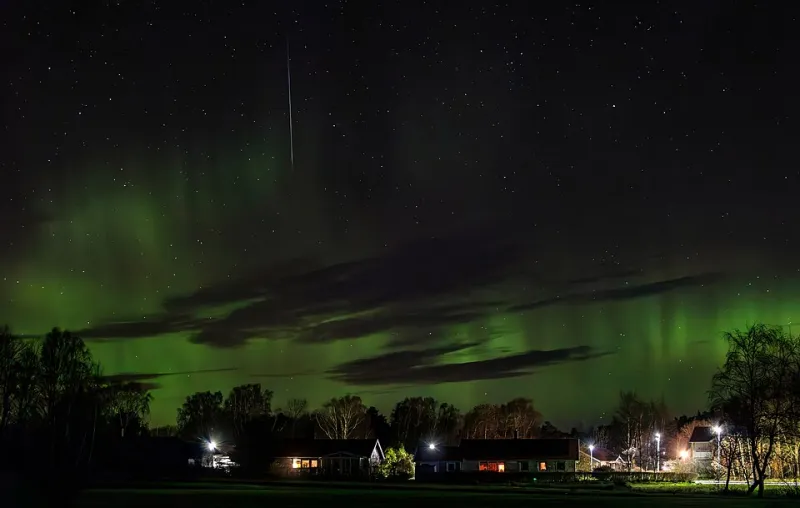
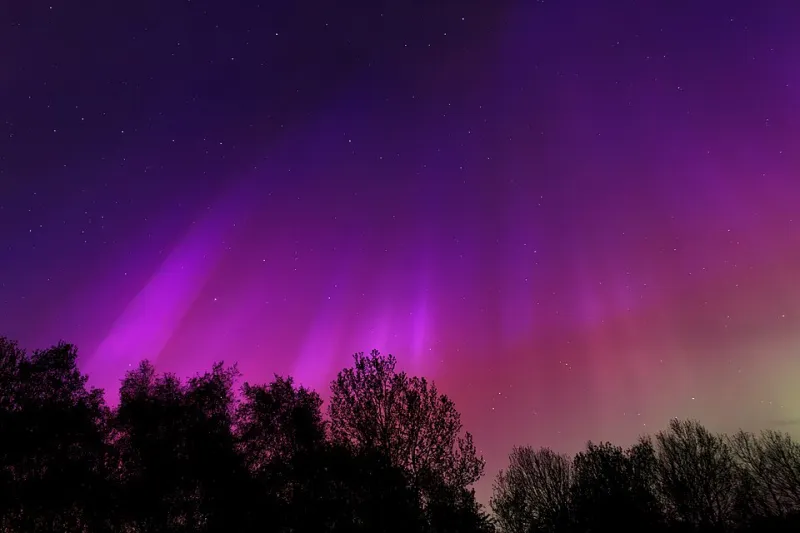
Some scientists worry that stronger language will invite hype. That's a fair concern. Solar storms are not movie villains, and most of them are manageable. But the solution to hype is not blandness. It's accuracy. Say what the storm is, what it can do, and what people should actually do about it. Usually the answer is 'nothing urgent,' but sometimes it's 'prepare for GPS outages' or 'expect aurora.'
A name is a signal. 'Space weather' signals a niche. 'Solar storm' signals a hazard. If we want the public and policymakers to treat solar storms like the infrastructure issue they are, we should start by using words that don't sound like a side quest. The Sun is not a hobby. It's the reason the lights stay on.