Texas Saw the Sky on Fire: Inside America's Accidental Aurora Boom
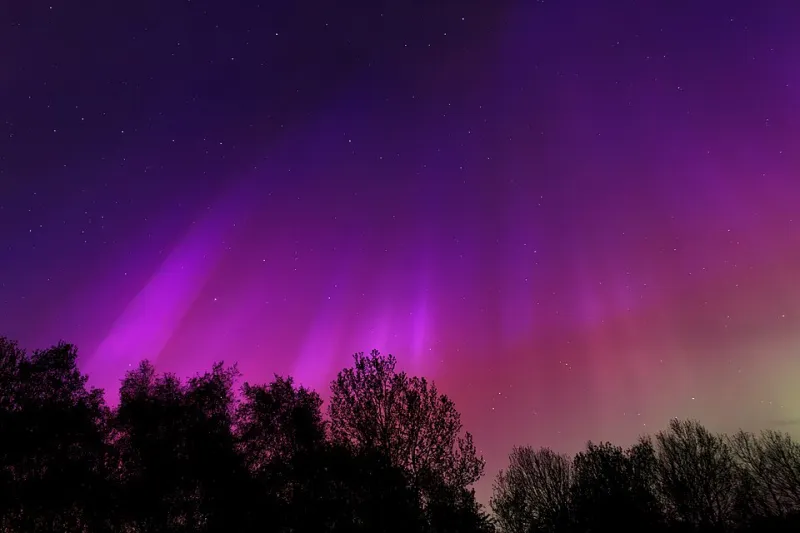
Photo: W.carter, CC BY-SA 4.0, via Wikimedia Commons
There's a particular kind of chaos that breaks out on American social media when the aurora reaches the Gulf Coast. Farmers in Iowa pull over on dark county roads. People in suburban Dallas stand in bathrobes on their lawns, phones pointed north. And somewhere, always, a skeptic insists the glowing sky is a gas leak.
It's not a gas leak. It's the Sun, punching well above its weight — and it's happening more often than it has in twenty years.
Why Your Aunt in Georgia Saw the Northern Lights
The short version: we're near the peak of the solar cycle, and this particular peak has been an overachiever. When the Sun unleashes a strong coronal mass ejection aimed at Earth, the resulting geomagnetic storm compresses and energizes our magnetosphere, pushing the auroral oval — normally parked over Alaska and Canada — south across the continental US.
During the biggest storms of this cycle, the lights have been photographed from every one of the lower 48. Not just glimpsed on a horizon. Overhead.
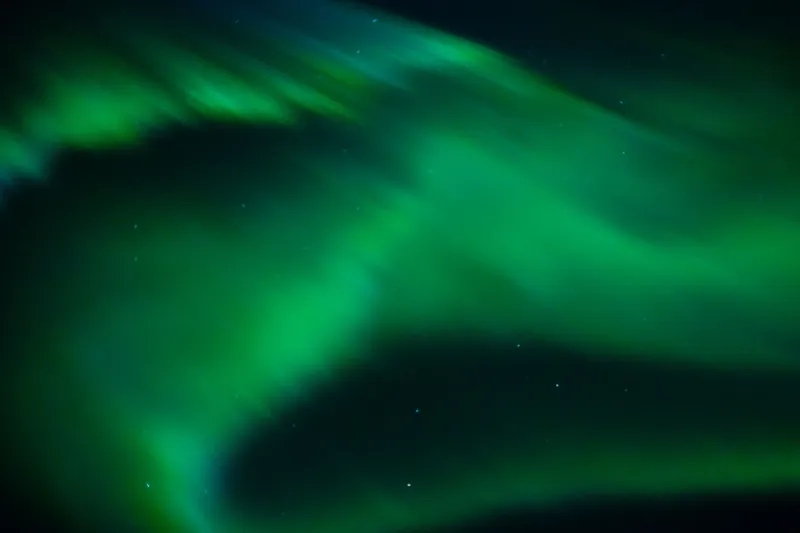
Here's the part most people don't realize: the aurora is often there before you can see it. The human eye is poor at detecting the dim green glow at night, but your phone camera, with a few seconds of exposure, pulls it right out of the sky. That's why the crowds suddenly materialize — someone posts a phone shot, the alert networks light up, and within an hour half the neighborhood is outside.
The Alert Economy
Aurora chasing in the lower 48 has developed genuine infrastructure. NOAA's Space Weather Prediction Center issues geomagnetic storm watches and warnings. The Kp index — a rough measure of global geomagnetic disturbance — gets quoted like a weather forecast. And community alert networks, where chasers post real-time sightings from their specific location, have become the difference between sleeping through a storm and standing in a field at 2 a.m. watching the sky ripple.
The strategy among serious chasers is simple: get north of city light, face away from light pollution, watch the northern horizon, and let the phone camera do the initial detection. When the displays intensify, the colors shift — green gives way to reds and purples higher up — and no app is needed. You just stand there and watch the Sun paint the sky.
The Window Won't Stay Open
Here's the honest caveat: solar maximum doesn't last. Activity will taper over the coming years, and the deep quiet of solar minimum will return, as it always does. The current stretch of frequent, far-south auroras is a generational anomaly — the best sustained viewing window since the early 2000s, and arguably better.
That doesn't mean the show ends abruptly. Strong storms can reach mid-latitudes even during the decline, and the biggest events of a cycle sometimes arrive fashionably late. But the reliable, multiple-times-a-month displays we've been enjoying? Those have an expiration date.
So consider this your nudge. Sign up for the alerts. Learn which nearby road heads away from town. Charge the phone battery.
The Sun is running a limited engagement, and the lower 48 has a front-row seat it hasn't held in a generation.