Half a Day and a Prayer: The Maddening Science Behind Solar Flare Prediction
Imagine you're running the power grid for a major American city. A call comes in from NOAA's Space Weather Prediction Center: there's a moderate chance of a significant solar flare in the next 24 hours. Do you start pre-emptively rerouting power? Alert hospital backup systems? Tell pipeline operators to throttle down? Or do you wait, knowing the forecast could be dead wrong — and that acting on a false alarm costs millions?
This is the real-world bind that grid operators, satellite managers, and defense contractors live in. And the uncomfortable truth is that the science of solar flare prediction hasn't solved it. Despite an era defined by extraordinary space instrumentation — NASA's Solar Dynamics Observatory, the Parker Solar Probe, a constellation of heliospheric watchdogs — the reliable prediction window for solar flares still tops out at roughly 12 hours. Sometimes less.
That's not a funding problem. It's not a technology gap you can throw a bigger telescope at. It's a physics problem, and it cuts right to the heart of how poorly we still understand the Sun's magnetic behavior.
The Forecast That Never Gets Better
Space weather forecasting has improved in meaningful ways over the past two decades. We're better at tracking coronal mass ejections once they're already launched. We've gotten sharper at identifying active regions on the solar surface that are statistically more likely to produce flares. But the moment of ignition — the actual trigger that turns a tense magnetic configuration into an X-class explosion — remains stubbornly unpredictable beyond that half-day window.
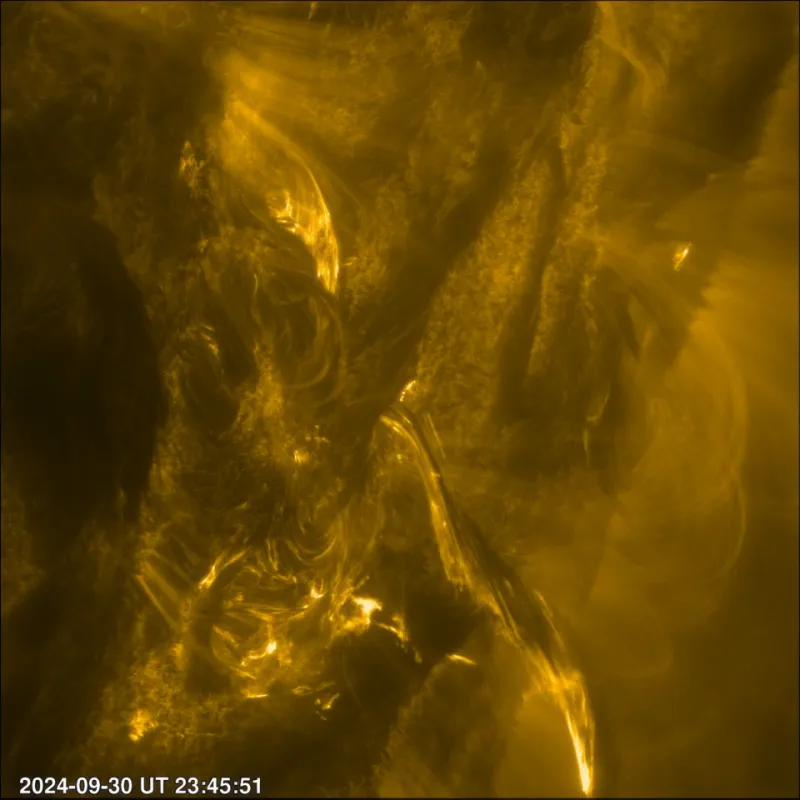
Part of the problem is observational. Solar flares are born in the Sun's magnetic field, specifically in regions where field lines become so tangled and stressed that they snap and reconnect in a violent release of energy. The process is called magnetic reconnection, and while we understand it conceptually, we can't measure the three-dimensional structure of the Sun's magnetic field with anything close to the precision needed to know when a specific region is about to blow.
We can see the surface. We can infer some subsurface activity through helioseismology — essentially listening to acoustic waves moving through the solar interior. But the corona, the outer atmosphere where flares actually originate, is notoriously difficult to probe in the detail that matters. The magnetic field measurements we do have are indirect, incomplete, and frankly a bit like trying to predict a tornado by looking at a weather map from three states away.
What the Models Are Missing
Solar physicists use a class of simulations called magnetohydrodynamic models — MHD, in the shorthand — to try to replicate the behavior of solar plasma and magnetic fields. These models have gotten impressively sophisticated. They can reproduce the broad strokes of how active regions evolve, how magnetic stress builds, and how reconnection events unfold.
The catch is that real solar physics operates across an enormous range of scales simultaneously. A flare might be triggered by a tiny instability — a small flux rope becoming unstable, a minor perturbation in the field — that cascades into a global event. Capturing that kind of multi-scale behavior in a model requires computational power that doesn't exist yet, and may not exist in any practical form for years.
There's also the issue of initial conditions. Even the best models are only as good as the data you feed them. If your magnetic field map of an active region is off by a few percent — which it almost certainly is, given current measurement limitations — the model's prediction of when and whether a flare occurs can be off by hours, or miss the event entirely.
Some researchers are turning to machine learning to find patterns in historical flare data that physics-based models might miss. Early results are genuinely promising. AI-driven approaches have shown modest improvements in short-term flare probability forecasts, particularly for large events. But even the most optimistic assessments acknowledge that machine learning is finding statistical correlations, not the underlying physical mechanism. It can tell you that certain magnetic configurations are associated with flares. It can't tell you why this particular configuration will erupt at 2:47 a.m. rather than next Tuesday.
The Infrastructure Bet Nobody Wants to Make
The 12-hour ceiling matters enormously when you start mapping it against the lead times that critical infrastructure actually needs.
Power grid operators in the US — particularly those managing high-voltage transmission lines across the northern states, which are more vulnerable to geomagnetically induced currents — generally need somewhere between 24 and 72 hours to implement protective measures in any organized way. Hardening transformers, redistributing loads, coordinating with neighboring grids: none of that happens in half a day without significant disruption and cost.
Satellite operators face a similar crunch. Repositioning a satellite to a safer orientation, or switching it to a protective safe mode, requires time and precision. A 12-hour warning is workable for some scenarios, but for a major X-class event, the margin for error is razor thin.
And then there's the false alarm problem. NOAA's Space Weather Prediction Center issues probabilistic forecasts, not certainties. An active region might carry a 60% chance of an M-class flare — but that means four out of ten times, nothing happens. Every time grid operators or satellite controllers respond to a warning that doesn't materialize, it costs money and erodes confidence in the forecast system. Too many false alarms and people start ignoring the warnings. That's when a real event becomes a catastrophe.
The Missions Trying to Close the Gap
The scientific community isn't standing still. ESA's Solar Orbiter, now in its science phase, is giving researchers their first sustained look at the Sun's polar regions — an observational blind spot that may be hiding important clues about how the global magnetic field organizes itself. The Parker Solar Probe continues diving closer to the Sun than any spacecraft in history, sampling the solar wind and magnetic environment in the inner heliosphere at unprecedented resolution.
There are also serious conversations happening about a mission to the Sun-Earth L5 Lagrange point — a location about 60 degrees behind Earth in its orbit — which would give forecasters a side view of solar active regions before they rotate into Earth-facing position. That kind of early-look geometry could extend the effective warning window by days, even if it doesn't solve the fundamental prediction problem.
On the ground, next-generation solar telescopes like the Daniel K. Inouye Solar Telescope in Hawaii are producing surface magnetic field maps at resolutions we've never had before. Early science from Inouye is already revealing fine structure in sunspot magnetic fields that previous instruments simply couldn't see. Whether that detail translates into better flare prediction is still an open question, but the data is genuinely new.
The Honest Answer
Here's the thing nobody in the space weather community particularly enjoys saying out loud: we may be approaching a fundamental limit. Not a technological limit, not a funding limit, but a physical one. Chaotic systems — and the Sun's magnetic field absolutely qualifies — have intrinsic predictability horizons. No matter how good our instruments get, there may be a ceiling on how far in advance any specific flare can be predicted, because the trigger itself is governed by processes that amplify tiny, unmeasurable fluctuations.
That's a sobering thought. But it's also an honest framing of the problem, and honest framing is where good science starts. The goal for the next decade isn't necessarily to push the prediction window from 12 hours to 72. It might be to get dramatically better at predicting flare intensity within that 12-hour window, or to give infrastructure operators better probabilistic tools so they can make smarter decisions under uncertainty.
The Sun is going to keep doing what it does. The question is whether we get smart enough, fast enough, to stop being surprised by it.