When the Sun Eats Your GPS: A Practical Field Guide to Signal Loss
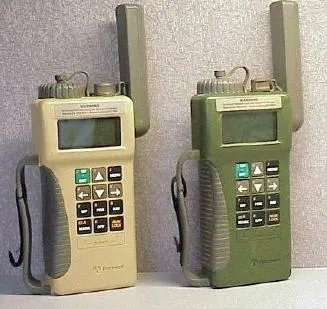
Photo: Unknown, Public domain, via Wikimedia Commons
Somewhere in Iowa right now, a tractor is steering itself down a row using corrections from a satellite 12,000 miles away. Somewhere over Colorado, an aircraft is flying a precision approach guided by the same constellation. A survey crew in Arizona, a container ship's crane operator in Long Beach, and the timing server in a regional bank are all leaning on the same signal.
That signal is astonishingly weak. GPS reaching the ground arrives at roughly a hundred quadrillionths of a watt. It works because the receiver is listening with extraordinary patience — and because the path it travels is quieter than almost anywhere else on the radio dial.
Then the Sun turns on.
Two different kinds of trouble
Solar interference with navigation comes in two flavors, and they behave nothing alike.
The first is raw noise. Solar radio bursts — the crackling radio emission thrown off by flares and by shock waves racing through the corona — can spike the 1.2 to 1.6 GHz band where GPS and its siblings live. During large events the Sun can briefly become one of the brightest radio sources in the sky at exactly those frequencies, raising the background noise floor high enough to drown out the satellites. This is a broadband hiss, and it happens on the daylit side of Earth, which is why agricultural users at local noon in June are the unlucky poster children.
The second is warping. Geomagnetic storms stir up the ionosphere, the shell of charged particles that the signal must pass through. That shell bends radio waves, and when it bends unevenly you get errors in the calculated position. Sharp gradients in total electron content can push standalone GPS accuracy from a couple of meters out to tens of meters, and if the geometry is bad enough, the receiver may lose carrier lock entirely.
The 2017 lesson nobody repeated
In September 2017, an X-class flare produced a radio burst that visibly degraded GPS performance across the sunlit hemisphere, with researchers documenting broad navigation errors for minutes. It was not a civilization-ending event. It was a reminder that a routine solar tantrum can knock the pins out of a system a lot of people quietly depend on.
Bigger geomagnetic storms are worse, because the ionospheric disruption lasts hours rather than minutes and covers a continent. Alaska sits under the auroral oval, where scintillation — rapid, ragged fluctuation of the signal — is a chronic nuisance for surveyors and for aviation.
Who in the US actually eats the cost
Ranked by how much they notice:
- Precision agriculture. Autosteer and section control using RTK corrections need accuracy measured in inches. Losing corrections for a few minutes means overlap, skips, and a wasted pass across a field that costs real money per acre.
- Surveying and construction. Machine control on grading equipment is unforgiving. A drifting fix shows up as a bad grade, and bad grades get re-cut.
- Aviation. The FAA's Wide Area Augmentation System, which enables vertical guidance on precision approaches, is sensitive to ionospheric storm effects. During strong storms, WAAS can issue alerts that take vertically guided approaches off the table, pushing aircraft back to less efficient procedures.
- Timing infrastructure. GPS is used less for position than for time — synchronizing cell networks, grid sensors, and financial transaction stamps. Receivers typically hold over on internal clocks for hours, but the margin is finite.
- Everybody else. Your map app will route you fine. It may not know which lane you are in for a few seconds, and on a bad day it may take a scenic detour through a subdivision.
Sun outages are not a metaphor
There is a third, more predictable phenomenon worth knowing about: twice a year around the equinoxes, the Sun lines up directly behind geostationary satellites for a few minutes a day, and satellite TV and some communications links drop out. Those events are scheduled, published in advance, and utterly unsurprising. They are also a decent reminder that the Sun is a radio source first and a ball of plasma second.
What you can do when the signal gets shaky
You cannot fix the ionosphere, but you can stop being surprised by it.
- Check the forecast before the workday, not after. NOAA's Space Weather Prediction Center publishes geomagnetic storm watches days ahead of a coronal mass ejection's arrival and radio blackout probabilities within hours of a flare. A G3 watch is a fine reason to move precision field work to the following morning.
- Use more than one constellation. Modern receivers track GPS, Galileo, GLONASS, and BeiDou. Multi-constellation gear degrades more gracefully because it has more geometry to work with.
- Lean on augmentation. RTK with a local base station beats a bare SBAS fix by an order of magnitude, and a receiver with inertial backup can coast through short outages without stalling the machine.
- Give your timing gear holdover headroom. If your operation depends on GPS time, know how long your oscillator stays within tolerance and make sure that number is longer than the worst storm you expect.
- Expect the daytime burst, not the storm. A big flare can black out radio and degrade navigation within eight minutes with essentially no warning. If your high-value task absolutely must run today, schedule it outside local solar noon in summer.
The real takeaway
Satellite navigation is a technological miracle standing on a signal thinner than a whisper, sent through a layer of atmosphere that the Sun actively stirs. It works almost all the time. Almost is doing a lot of work in that sentence, and the honest thing to do is plan for the exceptions rather than pretend they are not there.
Infopunks of Sol tracks the Sun's effects on the infrastructure we all use without thinking about it. See our space weather category for more on what actually reaches Earth and when.