The Sun Is About to Flip Its Magnetic Poles — Here's Why That Matters for the Next Ten Years
Somewhere around the peak of each solar cycle, something quietly extraordinary happens 93 million miles away. The Sun's north magnetic pole becomes its south, and vice versa. No fanfare, no dramatic visible event — just a gradual, chaotic reshuffling of the most powerful magnetic system in our solar neighborhood. It takes months, sometimes longer, and the two poles don't even flip simultaneously. For a while, the Sun can have two south poles at once.
We're heading into one of these reversal windows right now, and it's worth paying attention.
The Basics of a Polarity Flip
The Sun's magnetic field isn't a simple bar magnet with clean, stable poles. It's a churning, dynamic system generated by the movement of electrically charged plasma inside the Sun — a process called the solar dynamo. Over the course of roughly 11 years, magnetic activity builds from a minimum (calm, few sunspots) to a maximum (turbulent, frequent eruptions), and then back down again. The magnetic pole reversal happens near the peak of this cycle, when solar maximum activity is at or near its height.
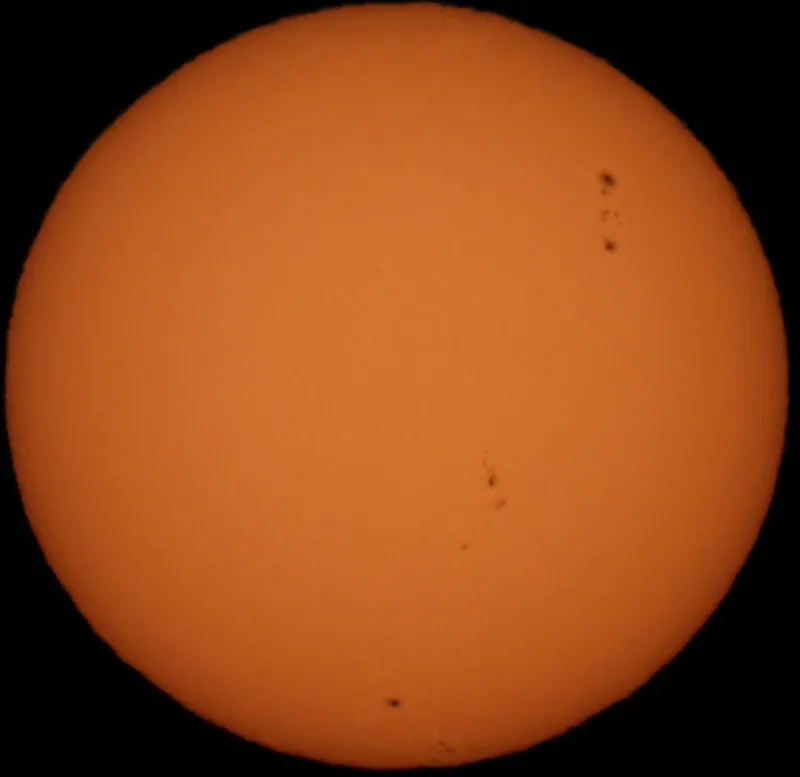
What actually drives the flip is the migration of magnetic flux from active regions — sunspot groups — toward the poles. As the cycle progresses, the leading polarity of sunspot pairs in each hemisphere cancels out the existing polar field, and the following polarity builds up a new one in the opposite direction. It sounds almost mechanical when you describe it that way, but in practice it's deeply messy. The timing varies. The two hemispheres often behave independently. Some reversals are stronger and more decisive than others.
Solar Cycle 25, which began in late 2019, has been notably more active than many forecasters initially predicted. Solar maximum for this cycle is expected to have occurred in 2024 or 2025, which puts us squarely in reversal territory. Researchers at institutions like NASA's Marshall Space Flight Center and Stanford's Wilcox Solar Observatory — which has been continuously monitoring the Sun's polar magnetic fields since 1976 — are watching the data closely.
What Changes When the Poles Flip
Here's where things get genuinely interesting for anyone who cares about what happens in near-Earth space.
The Sun's magnetic influence extends far beyond its visible surface. The heliosphere — the vast bubble of solar wind and magnetic field that envelops the entire solar system — is shaped by the Sun's overall magnetic structure. When the poles reverse, the large-scale configuration of this bubble shifts. The heliospheric current sheet, a vast undulating surface that separates regions of opposite magnetic polarity in the solar wind, becomes more tilted and wavy during and after a reversal.
That matters because of what the heliosphere does: it acts as a partial shield against galactic cosmic rays (GCRs) — high-energy particles that originate outside our solar system and stream inward constantly. During solar maximum, when the Sun's magnetic activity is highest and the heliosphere is most robust, cosmic ray flux at Earth drops. As the Sun settles into solar minimum after the reversal, cosmic ray penetration increases.
This isn't a trivial detail. Galactic cosmic rays ionize the upper atmosphere, and there's ongoing scientific debate about whether they influence cloud formation — and by extension, regional climate patterns. The connection is contested and complex, but it's not fringe science. Researchers including those associated with the CLOUD experiment at CERN have been investigating the atmospheric chemistry implications for years.
Historical Patterns and What They Suggest
The Sun has been flipping its poles approximately every 11 years for as long as we've had instruments capable of measuring it, and proxy records suggest the cycle has been running for much longer than that. Sunspot records going back to the early 17th century, combined with isotope records preserved in ice cores and tree rings, give us a surprisingly deep historical window into solar magnetic behavior.
What those records show is that the cycle isn't perfectly regular. It stretches and compresses. Some cycles are weak, some are strong. The Maunder Minimum — a period from roughly 1645 to 1715 when sunspot activity nearly vanished — may have involved a disruption of the normal polarity cycle. That same period coincides with some of the coldest decades of the Little Ice Age in Europe and North America, a correlation that keeps researchers interested even as they debate causation.
Solar Cycle 25 has been stronger than Cycle 24, which was itself notably weak. Whether that trend continues into Cycle 26 — which would begin around 2030 — is one of the more consequential open questions in solar physics right now. Some models suggest we could be heading into a period of elevated activity. Others point to longer-term indicators suggesting a gradual decline over coming decades.
What Astronomers Are Watching Right Now
The Wilcox Solar Observatory's polar field measurements are the gold standard for tracking the reversal in real time. Scientists look for the polar fields to weaken toward zero — which signals the transition — and then rebuild in the opposite polarity. The asymmetry between the north and south poles during this process tells researchers a lot about how the next cycle might behave.
The Solar Dynamics Observatory (SDO), orbiting Earth since 2010, provides continuous full-disk imagery and magnetogram data that lets researchers track magnetic flux migration with unprecedented clarity. Combined with data from the Parker Solar Probe and Solar Orbiter, the current reversal window is the best-observed in history.
Beyond the immediate science, there are practical downstream effects worth tracking. The post-reversal decline toward solar minimum — which will likely arrive somewhere around 2030 — will bring quieter space weather in some respects but elevated cosmic ray flux and potentially more challenging conditions for deep-space missions. Astronauts on any future lunar surface operations under the Artemis program or beyond will face different radiation environments depending on where we are in the cycle.
Why It Pays to Stay Tuned
A magnetic pole reversal sounds exotic, but it's a recurring feature of our star's personality — as regular and inevitable as the seasons, just on a longer timescale. What makes this particular reversal worth paying attention to is the context around it: an unexpectedly active solar cycle, a growing human presence in space, and an increasingly fragile technological infrastructure on Earth that has never been stress-tested by a truly severe geomagnetic event.
The Sun is going to keep doing what it does. The question is whether we're paying close enough attention to understand what it's telling us before the next chapter unfolds.