150 Years of Solar Records — And Half of Them Are a Mess
Here's a scenario that doesn't get nearly enough attention: a solar physicist sits down to study how the Sun behaved during a particularly active period in the early 1900s, hoping to use it as a model for predicting future storms. She pulls up the historical data. She cross-references two different observatories. The numbers don't match. Not a little — a lot. One dataset says sunspot counts were running high. Another, covering the same months, tells a completely different story.
Welcome to one of the quieter crises in solar science: the historical record is, in many places, genuinely unreliable. And that's a problem that ripples all the way into our ability to forecast space weather today.
The Archive Looks Impressive Until You Actually Use It
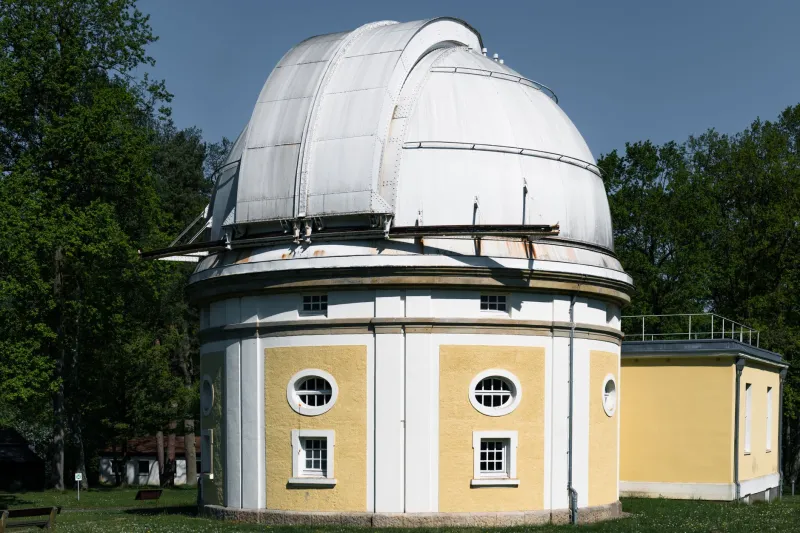
On paper, humanity has been keeping tabs on the Sun for a long time. Galileo was sketching sunspots in the early 1600s. By the mid-1800s, organized observational networks were forming across Europe and eventually the United States. The Royal Greenwich Observatory began its famous sunspot record in 1874. That's 150-plus years of data — sounds solid, right?
The trouble is that "data" covers a lot of sins. Early observers used wildly different telescopes, different filters, and different methods for counting and categorizing what they saw. One astronomer's "large sunspot group" was another's "two medium groups." Counting conventions shifted over decades without always being documented. Some observatories recorded data daily; others had gaps that stretched weeks or even months due to weather, funding shortages, or the simple fact that the person responsible for watching the sky got sick.
And then there are the lost records. Not metaphorically lost — physically gone. Fires, floods, wartime destruction, and institutional neglect have wiped out chunks of observational history that can never be fully recovered. Some archives exist only in handwritten logbooks sitting in storage rooms that haven't been properly catalogued, let alone digitized.
The Sunspot Number Problem
If you want a concrete example of how messy this gets, look no further than the sunspot number — arguably the most fundamental measurement in solar science.
For decades, the international sunspot number was anchored to a single reference observer: Rudolf Wolf, a Swiss astronomer who developed the counting system in the 1840s and spent years painstakingly trying to reconstruct historical records back to Galileo's time. Wolf's methodology became the standard. But Wolf was one person, with one telescope, working in one location.
As the network of observing stations grew, the data had to be stitched together from multiple sources using correction factors — essentially mathematical adjustments meant to account for the differences between observers. The problem is those correction factors were themselves based on assumptions that later turned out to be shaky. In 2015, the solar science community went through a major revision of the entire sunspot number record, adjusting values going back over a century. The revision was necessary and scientifically defensible. It also meant that every study ever published using the old numbers needed to be reconsidered.
That kind of wholesale revision doesn't happen in sciences with cleaner data.
When Satellites Arrived, They Didn't Automatically Fix Things
You might assume that the space age solved most of these problems. Satellites don't get cloudy skies. They don't take vacations. They operate with calibrated instruments and transmit standardized data.
True — but satellites introduced their own complications. Early solar observing missions in the 1960s and 70s used instruments that weren't designed with long-term consistency in mind. Sensors degrade in space. Calibration drifts. When one satellite's mission ended and another took over, scientists had to figure out how to reconcile the two datasets, which often didn't overlap cleanly.
The famous Total Solar Irradiance record — measuring how much energy the Sun pumps out — is a perfect case study. Stitching together readings from multiple missions spanning four decades has required enormous effort, and researchers still debate exactly how much the Sun's energy output has varied over that time. The uncertainty isn't huge in absolute terms, but when you're trying to model subtle climate effects or long-term solar cycles, even small discrepancies matter.
Forensic Astronomy: Hunting Clues in Unexpected Places
Faced with these gaps, solar scientists have gotten creative in ways that would feel right at home in a detective novel.
One approach involves mining unexpected archives. Old photographs taken for completely different purposes — historical eclipse expeditions, early astrophotography experiments, even amateur astronomy club records — sometimes contain usable solar data that nobody thought to extract at the time. Researchers have tracked down glass plate negatives sitting in university basements and processed them with modern software to pull out sunspot positions and sizes that were never formally recorded.
Another method involves comparing records across institutions that were operating simultaneously. If three observatories in different countries all logged data on the same day and two of them agree while one is a clear outlier, you can flag the outlier and try to figure out what went wrong. It's painstaking work, but it's slowly filling in some of the blanks.
And then there's the creative use of natural proxies — tree rings, ice cores, and sediment layers that preserve chemical signatures of past solar activity. These records don't give you sunspot counts, but they can tell you roughly how active the Sun was during periods where the instrumental record is weakest. Cross-referencing proxy data with historical observations helps scientists calibrate their confidence in the patchy written record.
Why It Matters for the Next Big Storm
This isn't just an academic exercise in historical tidying. The gaps in solar history have direct consequences for space weather prediction.
Our models for forecasting solar storms — the kind that can knock out power grids, disrupt GPS, and fry satellites — are partly built on historical patterns. How often do extreme events happen? How intense can they get? What's the range of "normal" solar behavior across multiple cycles? All of those questions depend on having a reliable long-term record.
When that record has holes, prediction models get calibrated against an incomplete picture. It's a bit like trying to forecast hurricane season if you only had reliable data for about half the years on record and had to guess at the rest. You can still make useful predictions, but your confidence intervals are wider than you'd like, and the tail risks — the really extreme events — are harder to constrain.
The Carrington Event of 1859 is the classic example everyone points to. It's widely described as the most intense solar storm in recorded history. But "recorded history" in 1859 meant a handful of observatories with primitive instruments and no satellites. How confident are we that Carrington was truly the worst-case scenario, versus simply the worst event we happened to catch with the limited tools available? The honest answer is: not as confident as we'd like to be.
The Slow Work of Getting It Right
The good news is that the solar science community is actively working on all of this. International collaborations are digitizing historical archives. Revised datasets are being published with better uncertainty estimates. New observatories and missions are being designed from the start with long-term continuity in mind — explicitly built to overlap with existing records so future scientists don't face the same stitching problems.
It's slow, unglamorous work compared to the excitement of watching a solar flare erupt in real time. But it's arguably just as important. Understanding the Sun's future starts with honestly reckoning with everything we got wrong — or simply never recorded — about its past.
The star at the center of our solar system has been doing its thing for about 4.6 billion years. We've been paying serious attention for maybe 150. Closing the gaps in even that tiny slice of history turns out to be a bigger challenge than most people realize.