Listening to the Sun's Heartbeat: How Scientists Are Mapping What's Brewing Beneath the Surface
You can't crack the Sun open. You can't drill a probe into its convection zone or stick a thermometer into its radiative layer. And yet, scientists today have a surprisingly detailed picture of what's happening tens of thousands of miles beneath the solar surface — not by looking harder, but by listening.
That's the basic premise behind helioseismology, a field that sounds exotic but borrows from some pretty familiar physics. The same way seismologists on Earth use earthquake waves to map the planet's hidden interior, solar scientists use the Sun's own acoustic vibrations to peer inside a star we could never otherwise see. The result is something genuinely strange and wonderful: a technique that turns sunlight into sonar.
The Sun Never Stops Humming
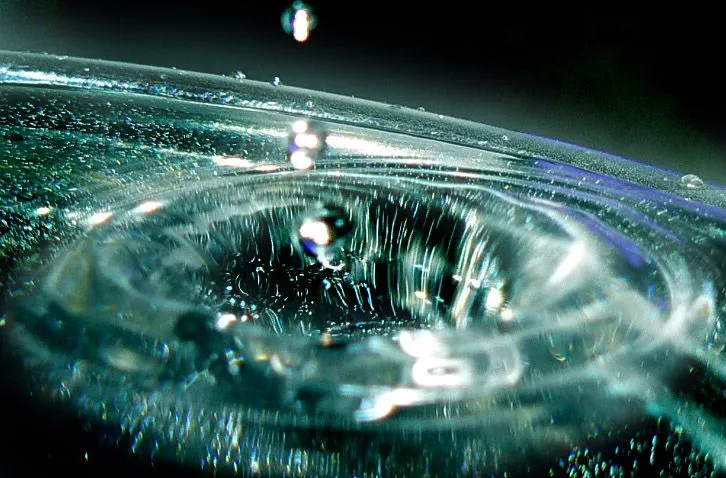
The Sun oscillates. Constantly. Millions of acoustic waves ripple through its interior at any given moment, generated by the turbulent convection happening just below the surface. These waves travel inward, bounce off different layers, and return to the surface — where they show up as subtle, rhythmic rises and falls in the solar atmosphere. Individual oscillations last about five minutes, and on their own they're nearly imperceptible. But stacked together, they create a complex interference pattern that's written all over the Sun's surface if you know how to read it.
The trick is that these waves don't all behave the same way. Just like seismic waves on Earth speed up or slow down depending on what material they pass through, solar acoustic waves are altered by temperature, density, and — critically — the flow of plasma currents inside the Sun. By carefully measuring how those waves are distorted, scientists can work backward and reconstruct a map of what they passed through.
It's not unlike the way a doctor reads an ultrasound. You're not seeing the tissue directly. You're seeing the echo.
Subsurface Rivers That Drive Solar Behavior
One of the most significant things helioseismology has revealed is that the Sun's interior isn't a static, uniform blob of hot plasma. It's dynamic. There are enormous flows — sometimes called meridional circulation — that carry material from the equator toward the poles and back again in slow, massive conveyor-belt loops. There are also differential rotation patterns, where the equatorial regions spin faster than the poles, creating shear layers that play a direct role in generating the Sun's magnetic field.
And then there are the subtler things. In recent years, researchers have used helioseismic data to detect relatively shallow subsurface flows — plasma currents sitting just a few thousand miles below the surface — that appear to precede sunspot formation by weeks or even months. That's a big deal. Sunspots are the surface signatures of intense magnetic activity, and magnetic activity is what drives solar flares and coronal mass ejections, the eruptions that can slam into Earth's magnetosphere and wreak havoc on satellites, power grids, and GPS systems.
If you can see the currents before the sunspots appear, you've got a head start on forecasting that no surface observation can give you.
The Forecasting Frontier
Right now, most operational space weather forecasting relies on what's already visible on the Sun's surface — active regions, sunspot configurations, the behavior of the solar corona. It's reactive, not predictive. Scientists are essentially watching the fuse burn and trying to estimate when the fireworks go off.
Helioseismology offers something different: a window into the conditions that create those fuses in the first place. Research groups — including teams working with data from NASA's Solar Dynamics Observatory and the Global Oscillation Network Group — have been refining methods to use subsurface flow signatures as early warning indicators. Some studies have suggested lead times of up to two months for predicting where active regions are likely to emerge.
Two months is an eternity in space weather terms. Right now, a major CME gives us maybe a day or two of warning after it launches. If scientists could reliably flag high-risk zones on the Sun weeks before they become active, that would fundamentally change how we prepare for geomagnetic storms — not just for power utilities and satellite operators, but for astronauts on long-duration missions who have no magnetosphere to hide behind.
The caveat, of course, is that "up to two months" doesn't mean "reliably two months." The technique is still being refined, and solar physicists are quick to point out that subsurface flows are indicators, not guarantees. The Sun has a habit of defying clean predictions.
What the Data Actually Looks Like
For those curious about the machinery behind all this: the raw input is Doppler velocity maps of the solar surface. Instruments like the Helioseismic and Magnetic Imager aboard the Solar Dynamics Observatory measure tiny shifts in the wavelength of light coming from the Sun's surface — shifts caused by the up-and-down motion of those acoustic oscillations. These measurements are taken continuously, producing an enormous stream of data that gets processed through sophisticated inversion algorithms to reconstruct three-dimensional flow maps.
It's computationally intense work. The Sun doesn't make it easy — unlike Earth, where you can place seismometers at precise locations around the globe, solar observations are limited by viewing geometry, atmospheric noise, and the fact that we can only see one face of the Sun at a time (though far-side imaging techniques using reflected wave paths are helping with that).
Still, the field has come a remarkably long way since its early days in the 1960s, when the five-minute oscillations were first detected and nobody quite knew what to make of them. Today, helioseismology is a mature subdiscipline with its own journals, its own dedicated instruments, and an increasingly direct pipeline into operational forecasting.
Why This Matters Beyond the Science
There's a practical urgency here that's easy to understate. The US economy is deeply dependent on infrastructure that space weather can damage — GPS, communications satellites, high-frequency radio, the electrical grid. The 2003 Halloween storms alone caused hundreds of millions of dollars in satellite damage and forced airlines to reroute transpolar flights. A Carrington-level event today would be catastrophically more expensive.
Better forecasting tools don't just satisfy scientific curiosity. They give utilities time to take transformers offline, give satellite operators time to put spacecraft into safe mode, and give mission planners time to keep astronauts out of harm's way. Every additional hour of warning has tangible economic and safety value.
Helioseismology won't solve the forecasting problem on its own — the Sun is too complex for any single technique to crack. But as a way of seeing what's coming before it's visible, of reading the Sun's internal mood before it shows on its face, it's one of the most promising tools the field has. We're essentially learning to interpret a language the Sun has been broadcasting for billions of years. We're just finally starting to understand what it's saying.