When the Sun Clocks Out: The Strange Science of Solar Minimum and Why Quiet Doesn't Mean Calm
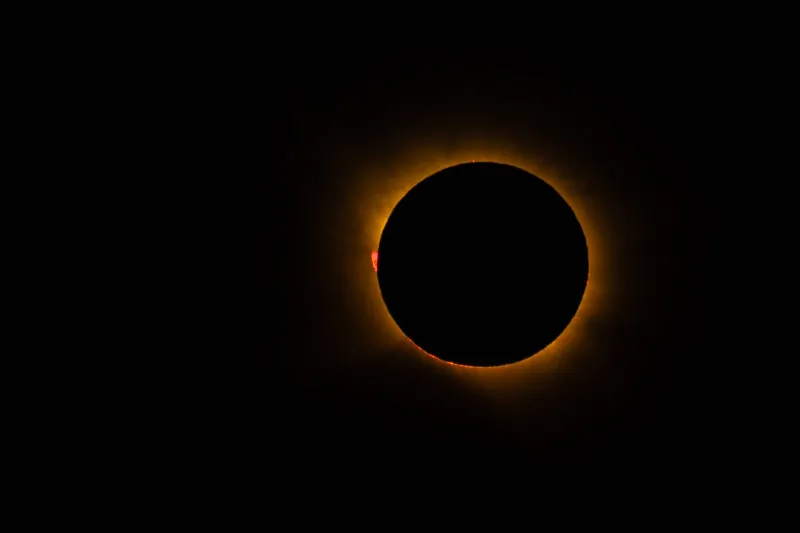
Every few years, the conversation around solar science pivots to the same dramatic highlights: monster flares, coronal mass ejections barreling toward Earth, auroras lighting up the skies over Chicago. Solar maximum is the rockstar phase of the sun's 11-year cycle, and it earns its reputation. But there's another phase that rarely gets its own spotlight — one that's arguably stranger and, in some ways, more consequential for life on Earth.
Solar minimum is the sun's off-season. Sunspot counts drop. Flare activity dials back. The solar wind thins out. And to a casual observer, it looks like the sun is simply... napping. Nothing to report, right?
Wrong. Spectacularly wrong, actually.
The Counterintuitive Physics of a Quieter Sun
Here's the thing about solar minimum that tends to surprise people: when the sun gets quieter, certain cosmic phenomena don't follow suit. In fact, some of them intensify.
Take galactic cosmic rays — high-energy particles that originate from outside our solar system, flung across the galaxy by ancient supernovae and other violent events. During solar maximum, the sun's strong, gusty magnetic field acts like a shield, deflecting a significant chunk of these particles before they can penetrate the inner solar system. The solar wind is dense and fast, and it does a decent job of keeping the cosmic neighborhood swept clean.
But during solar minimum? That magnetic shield weakens. The solar wind slows and thins. Galactic cosmic rays flood into the inner solar system in greater numbers, and Earth's upper atmosphere takes a measurably higher dose of them. Studies using neutron monitors — ground-based instruments that count energetic particle strikes — consistently show cosmic ray flux spiking during solar minimum periods. The last deep minimum, which stretched from roughly 2008 into 2009 and was one of the most prolonged in a century, saw cosmic ray intensities reach some of the highest levels recorded in the space age.
This matters for more than just physics bragging rights. Cosmic rays ionize atmospheric molecules, which has downstream effects on atmospheric chemistry, cloud formation hypotheses (still debated, but actively researched), and radiation exposure for airline crews and frequent flyers crossing polar routes. The FAA actually tracks space radiation exposure for aviation workers — and solar minimum is a period when those numbers quietly climb.
Earth's Atmosphere Does Something Unexpected
Pull back to the thermosphere — the outermost layer of Earth's atmosphere, sitting roughly 60 to 600 miles above the surface — and solar minimum gets even weirder.
During solar maximum, the sun's intense ultraviolet and X-ray output heats the thermosphere, causing it to expand outward. This expansion increases atmospheric drag on satellites and space debris in low Earth orbit, which actually helps clean up orbital clutter by gradually pulling objects back toward reentry.
During solar minimum, that UV and X-ray output drops significantly. The thermosphere cools and contracts — sometimes dramatically. NASA researchers have documented the thermosphere shrinking to unusually low densities during deep solar minima, with the 2008–2009 minimum producing thermospheric density readings roughly 30 percent lower than expected based on prior cycles.
The practical consequence? Less atmospheric drag. Orbital debris and defunct satellites stay aloft longer. The debris environment in low Earth orbit — already a growing concern for active missions — gets a little more persistent. As we pack more commercial satellites into orbit every year, a contracted thermosphere during minimum is a detail that spacecraft operators and space traffic management teams can't afford to ignore.
The Weird Magnetism of Solar Minimum
Here's another counterintuitive wrinkle: solar minimum is actually when the sun's magnetic field goes through its most fundamental transformation.
Around the time of solar maximum, the sun's magnetic poles flip — a dramatic reversal that takes years to complete. But the magnetic configuration that emerges from that reversal doesn't fully stabilize until minimum. During minimum, the sun settles into a cleaner, more organized dipole structure, with open magnetic field lines stretching from the poles deep into the solar system.
These open field lines create what scientists call coronal holes — regions where the sun's magnetic field doesn't loop back on itself but instead streams outward. Coronal holes are persistent features during solar minimum, and they generate fast-moving solar wind streams that can still slam into Earth's magnetosphere with surprising punch. These are called high-speed stream interactions, and they're responsible for a category of geomagnetic disturbances called recurrent geomagnetic storms — modest by flare standards, but predictable and persistent in a way that maximum-era eruptions rarely are.
So during minimum, you trade unpredictable explosive events for a steadier drumbeat of moderate geomagnetic activity. For operators of satellites, GPS infrastructure, and power grids, "moderate but predictable" has its own set of operational headaches.
The Upper Atmosphere's Unexpected Chemistry Lab
Solar minimum also reshapes the chemistry of the upper atmosphere in ways researchers are still untangling. With reduced solar UV output, the production of certain molecules in the stratosphere and mesosphere shifts. Ozone chemistry, for instance, is partly driven by photodissociation reactions that depend on UV intensity — so a quieter sun means a different chemical environment at altitude.
And then there's the ionosphere — the electrically charged layer that radio signals bounce off of. During solar minimum, the ionosphere becomes less dense and less predictable in its own right, creating unusual propagation conditions for HF radio communications. Amateur radio operators in the US know this well: solar minimum is when certain long-distance bands that thrive on ionospheric skip go frustratingly quiet, while other frequencies behave in unexpected ways.
The Minimum Nobody Measured Well Enough
One of the more frustrating aspects of studying solar minimum is that, historically, it was treated as the boring interlude between the interesting stuff. Observational resources and research attention naturally flowed toward maximum. As a result, the data record for minimum — especially the deep, unusual minima like the one around 2008–2009, sometimes called a "grand minimum candidate" by cautious researchers — is patchier than scientists would like.
That's starting to change. The Parker Solar Probe, launched in 2018, and the Solar Orbiter mission have been collecting data through portions of the current cycle, including transition periods. Researchers are increasingly treating minimum as a scientifically valuable baseline rather than dead air between cycles.
Because here's what solar minimum really is, stripped of the boring-phase reputation: it's the solar system operating with its shields down. Cosmic rays pour in. The thermosphere shrinks. Coronal holes persist. The sun's magnetic architecture resets. None of that is boring. It's just quieter in the ways we're used to measuring loudness.
The sun clocking out, it turns out, is still the sun doing something worth watching.