The Sun's Cosmic Reset Button: Inside the Violent Physics of Magnetic Reconnection
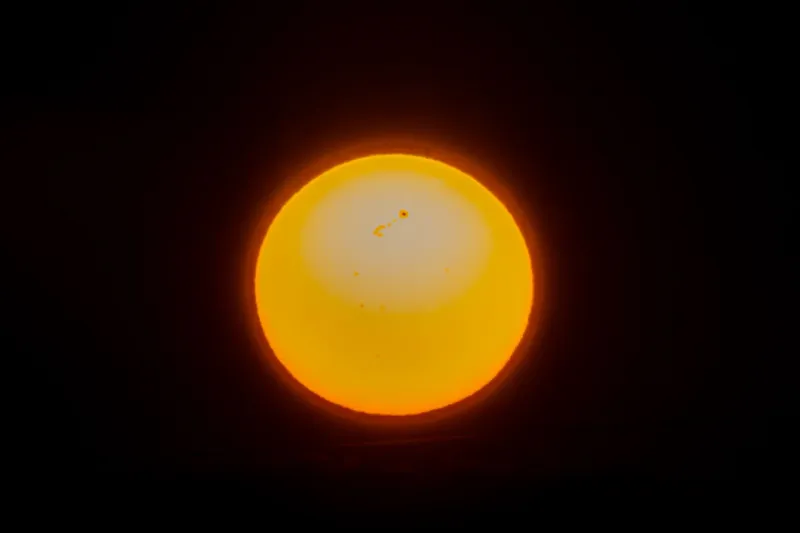
The Sun doesn't announce most of what it does. No press release, no warning siren. It just quietly goes about its business — a 4.6-billion-year-old plasma furnace running on physics that still makes researchers scratch their heads. And somewhere in that churning, magnetized atmosphere, roughly every 90 seconds, the invisible architecture of the corona rewrites itself in an act of electromagnetic violence so fast and so energetic that it challenges the very models we use to describe plasma behavior.
The process is called magnetic reconnection. If you've heard the name before, it was probably in the context of solar flares or coronal mass ejections — the dramatic headline-grabbers of space weather. But reconnection isn't just a trigger for those big events. It's happening constantly, everywhere in the corona, quietly pumping energy into the solar atmosphere in ways scientists are still struggling to fully account for.
To understand why that's a big deal, you need to understand what the corona actually is — and why it's such a puzzle.
The Coronal Heating Problem Nobody Has Fully Solved
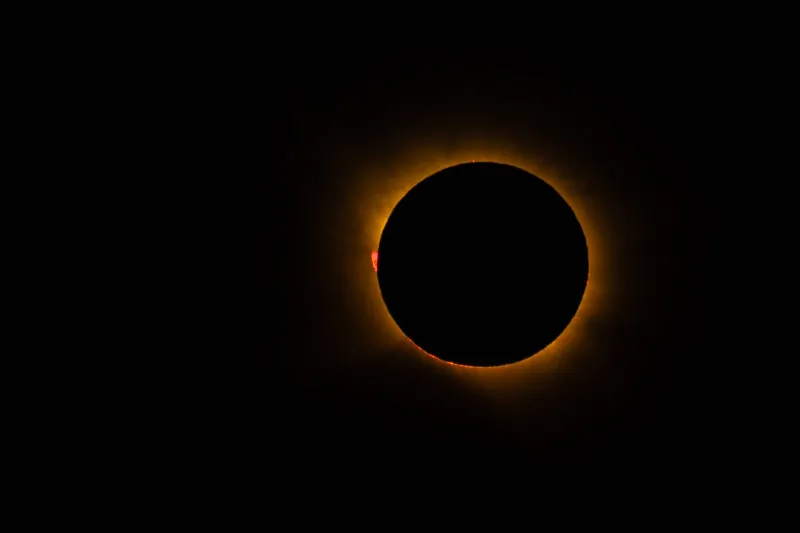
Here's something that should bother you more than it probably does: the Sun's surface sits at around 10,000 degrees Fahrenheit. Move outward into the corona — the wispy, gossamer outer atmosphere visible during a total solar eclipse — and temperatures explode to somewhere between 1 and 3 million degrees Fahrenheit. Sometimes higher.
That's backwards. By every intuitive measure of thermodynamics, moving away from a heat source should mean getting cooler. The corona defies that expectation with almost casual indifference. Scientists have been arguing about why since the 1940s, and while no single explanation has won the debate outright, magnetic reconnection is one of the strongest contenders on the list.
The basic idea is this: the Sun's magnetic field is not a tidy, well-organized structure. It's a chaotic tangle of field lines rooted in the churning plasma below the surface, constantly being twisted, braided, and stretched by convective motion. When field lines carrying opposing magnetic polarity get pushed close enough together — separated by only a thin boundary called a current sheet — something extraordinary happens. The field lines don't just pass through each other. They break apart and reconnect with new partners in a completely different configuration.
In the process, an enormous amount of stored magnetic energy converts almost instantaneously into heat, kinetic energy, and particle acceleration. We're talking about energy releases that, in the case of major flares, can reach the equivalent of a billion hydrogen bombs. Even the small-scale reconnection events — called nanoflares — are individually modest, but they're happening so relentlessly across the entire corona that their cumulative energy output may be what keeps that atmosphere scorchingly hot.
Why "Invisible" Is the Wrong Word — But Also Kind of Right
Here's where things get tricky from an observational standpoint. Magnetic reconnection itself doesn't produce light in any straightforward way that traditional telescopes easily pick up. What it produces is consequences — heated plasma, accelerated particles, reorganized magnetic topology — and scientists have to work backward from those consequences to infer that reconnection occurred.
For decades, that meant reconnection was essentially theoretical — something the math strongly predicted but that nobody could directly watch in action. That's changed considerably in recent years. NASA's Parker Solar Probe and the Solar Orbiter mission (a collaboration with the European Space Agency) have been getting closer to the Sun than any previous spacecraft, and they're detecting signatures of reconnection events in the solar wind — including peculiar reversals in the magnetic field called "switchbacks" that many researchers now believe are the downstream fingerprints of reconnection happening near the Sun's surface.
Meanwhile, observations from the IRIS spacecraft (Interface Region Imaging Spectrograph) have been catching ultraviolet flashes in the chromosphere — the layer just below the corona — that match the predicted energy signatures of small-scale reconnection events with remarkable consistency. The invisible is slowly becoming visible, one data point at a time.
The 90-Second Rhythm Nobody Expected
One of the more startling recent findings is that reconnection in certain coronal structures appears to operate on a surprisingly regular cadence — something in the neighborhood of 90 seconds in some active regions. That periodicity wasn't something early theoretical models predicted, and it's forced researchers to reconsider how reconnection is triggered and sustained.
The leading explanation involves something called plasmoid instability. When a current sheet gets thin enough, it doesn't just reconnect once — it becomes unstable and breaks up into multiple magnetic islands, or plasmoids, that chain-react through the sheet in rapid succession. That cascading behavior could explain both the quasi-periodic timing and why energy release during reconnection happens so much faster than classical physics models would suggest.
This is more than an academic debate. The rate at which reconnection releases energy has direct implications for space weather forecasting. If we can model the rhythm and trigger conditions of reconnection more accurately, we get better at predicting when a stressed magnetic region on the Sun is about to go from simmering to explosive — which is exactly the kind of advance warning that satellite operators, power grid managers, and astronauts on future deep-space missions desperately need.
What the Sun Is Teaching Fusion Labs Back on Earth
Here's the part of this story that most people don't see coming: magnetic reconnection isn't just a solar physics problem. It's a fusion energy problem.
Inside tokamak reactors — the doughnut-shaped devices that labs like MIT's Plasma Science and Fusion Center and the international ITER project in France are betting on for clean energy — plasma confinement depends on carefully maintained magnetic field configurations. Reconnection events inside a tokamak are called disruptions, and they're essentially the reactor equivalent of a solar flare. They can happen suddenly, dump enormous energy into the reactor walls, and in large-scale machines, they pose a serious engineering challenge to safe operation.
Researchers studying solar reconnection and fusion plasma physicists are increasingly working from the same playbook. Insights from Parker Solar Probe's close-up observations of reconnection dynamics are informing how fusion engineers think about disruption prediction and mitigation. The Sun, in other words, is running a free physics experiment at scales no Earth-based laboratory could replicate — and the smartest move is to pay attention.
The Architecture We Can't Stop Dismantling
There's something almost philosophically strange about magnetic reconnection when you sit with it long enough. The Sun spends enormous energy building complex magnetic structures — weaving field lines together over days and weeks through the slow grind of plasma convection — only to have those structures violently simplify themselves in fractions of a second. Build, destroy, rebuild. It's a cosmic cycle of creative demolition happening at scales from the microscopic current sheet to the full-disk reorganization of the solar magnetic field.
And it's not just happening on the Sun. Reconnection drives auroras at Earth when solar wind field lines merge with our planet's magnetosphere. It occurs at Jupiter, Saturn, and in the magnetospheres of distant stars. It may even play a role in powering some of the most energetic phenomena in the universe — jets from black holes, gamma-ray bursts, pulsar wind nebulae.
The Sun is our closest laboratory for all of it. Every 90 seconds or so, right above our heads, the rules of plasma physics get rewritten in real time. Scientists are finally getting close enough — literally and figuratively — to watch it happen.