Flesh, Metal, and Fury: The Unsolved Puzzle of Protecting Astronauts From Space Radiation
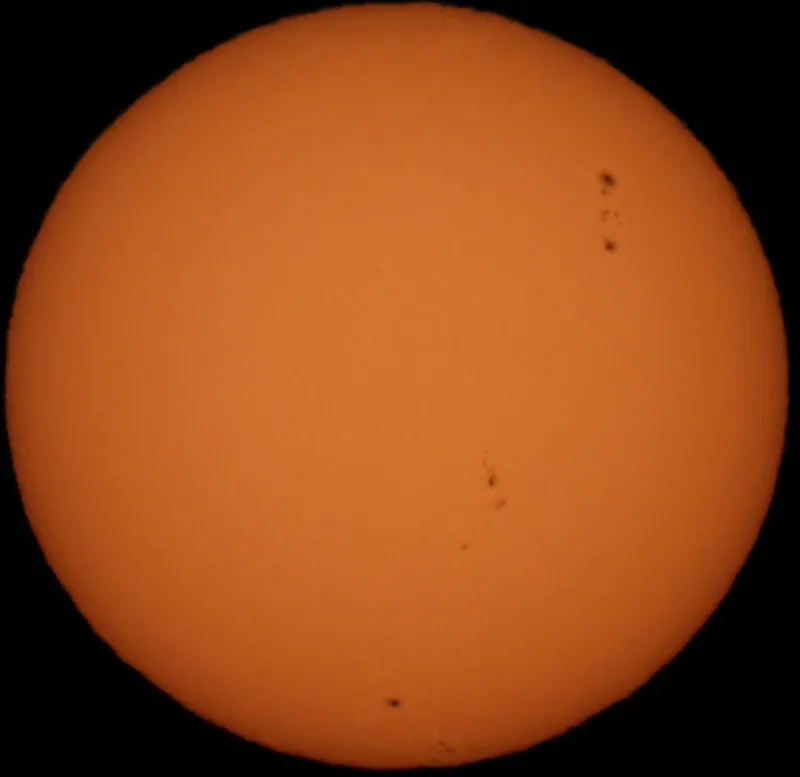
Photo: VulcanSphere, Public domain, via Wikimedia Commons
Imagine you're six months into a Mars transit. Earth is a pale blue dot behind you, and the Sun just unleashed a massive solar particle event — a wall of high-energy protons traveling at a significant fraction of the speed of light. Your spacecraft's aluminum hull, the same stuff soda cans are made of, might as well be tissue paper. This isn't science fiction. It's one of the most pressing engineering nightmares in human spaceflight, and nobody has fully cracked it yet.
Radiation in deep space comes in two distinct and equally nasty flavors. Solar energetic particles (SEPs) are bursts of protons and heavy ions ejected during solar flares and coronal mass ejections. They arrive with relatively little warning — sometimes just minutes — and can deliver a lethal dose in hours. Then there are galactic cosmic rays (GCRs), the slow-burn threat: high-energy particles that originate outside our solar system and penetrate almost everything we've tried to throw at them. Together, they form a radiation environment that would make a nuclear plant worker nervous.
Why Earth Has It Easy
Back home, we're spoiled. Earth's magnetic field deflects a huge chunk of incoming charged particles, and our thick atmosphere absorbs much of what gets through. Astronauts on the International Space Station still benefit from partial protection inside the magnetosphere, though they do receive elevated radiation doses compared to people on the ground. But step outside that magnetic bubble — on a Moon base, in transit to Mars, or anywhere in deep space — and the rules change completely.
NASA's own estimates suggest an unprotected astronaut on a round-trip Mars mission could absorb a career radiation limit in just the transit phases alone, before even landing. That's not including time spent on the Martian surface, which has almost no magnetic field and only a thin whisper of an atmosphere. The agency's current acceptable career exposure limits, already under scientific debate, would be blown past on a single mission.
The Aluminum Problem
For decades, the default solution has been mass shielding — just put more metal between the astronaut and space. It works, to a point. Aluminum absorbs lower-energy particles reasonably well. But here's the cruel twist: when high-energy GCR particles slam into thick metal shielding, they don't just stop. They fragment into secondary particles, sometimes creating a shower of radiation that's worse than the original. You can actually make things more dangerous by adding more aluminum. Engineers call this the shielding paradox, and it's a headache that still doesn't have a clean solution.
Polyethylene — the stuff in plastic bags and cutting boards — turns out to be a better shielding material than aluminum for certain particle types, thanks to its high hydrogen content. Hydrogen atoms are excellent at absorbing proton radiation without producing as many nasty secondaries. NASA has experimented with polyethylene panels on the ISS, and research continues into hydrogen-rich composite materials that could line future spacecraft walls.
The Magnetic Deflection Dream
If passive materials have limits, why not fight fire with fire? Charged particles can be steered by magnetic fields — it's literally how particle accelerators work. The concept of an active magnetic shield that surrounds a spacecraft and deflects incoming radiation has been floating around for decades. It's elegant in theory. In practice, it's brutally hard to engineer.
The magnetic field strength required to deflect high-energy GCRs would need to be enormous — far beyond what current superconducting magnet technology can produce at a reasonable size and weight. There are also serious concerns about the field's interaction with onboard electronics and the astronauts themselves. Several international research groups, including teams working under the European Space Agency's SR2S project, have explored superconducting toroidal magnet configurations that could theoretically create a protected zone inside the field. Progress has been real but slow, and a flight-ready system remains years away at minimum.
Pharmaceutical and Biological Approaches
Here's where it gets genuinely weird and exciting: some researchers are betting that the answer isn't just about hardware. Radioprotective drugs — compounds that help cells resist or repair radiation damage — are an active area of research. Amifostine has been used in cancer patients undergoing radiation therapy for years, but it has significant side effects and doesn't protect the central nervous system well. NASA-funded research is exploring antioxidant cocktails, DNA repair stimulants, and even gene therapy approaches that might make human cells more resilient to radiation damage.
There's also growing interest in the microbiome. Early studies suggest that gut bacteria composition affects how well mammals handle radiation exposure. It sounds almost absurd, but feeding astronauts specific probiotic regimens before and during missions might genuinely reduce radiation injury. The biology is complex, the data is preliminary, and nobody's calling it a solution yet — but it's a real line of investigation.
The Warning System Gap
Part of the radiation problem isn't just about shielding — it's about timing. A solar energetic particle event can go from zero to dangerous in under an hour. Current space weather forecasting can sometimes provide 15 to 30 minutes of warning, which is barely enough time to get astronauts into a pre-designated storm shelter inside a spacecraft. On a Mars surface mission, that shelter would likely be a small, heavily shielded room lined with water tanks or polyethylene panels — essentially a radiation bunker inside the habitat.
Improving solar event prediction is therefore just as critical as improving shielding. Better forecasting means more time to react, which means lower cumulative doses even with imperfect hardware. NASA's collaboration with NOAA's Space Weather Prediction Center and international partners is part of this effort, but the prediction models for SEP events specifically remain frustratingly imprecise.
The Clock Is Ticking
With NASA's Artemis program targeting sustained lunar presence and a crewed Mars mission on the horizon within the next couple of decades, the radiation problem isn't a future concern — it's an immediate engineering priority. Private companies like SpaceX, which has its own Mars ambitions, will face the same challenges. No amount of rocket innovation matters if the humans inside arrive with compromised immune systems, elevated cancer risk, and potential cognitive damage from radiation exposure.
The honest answer right now is that no single solution is going to save the day. The path forward is almost certainly a layered approach: smarter materials combined with active shielding research, better pharmaceuticals, improved early warning systems, and mission planning that minimizes exposure during high-risk solar activity periods. It's messy, expensive, and humbling — a reminder that space doesn't care about our ambitions.
But the work is happening, piece by piece, in labs from Houston to Tokyo to Munich. And given what's at stake — the health of every human being we ever send beyond the Moon — it's probably the most important engineering problem in spaceflight right now.