Doomscrolling Through a Solar Storm: Why the Next Big One Will Be a Media Event First
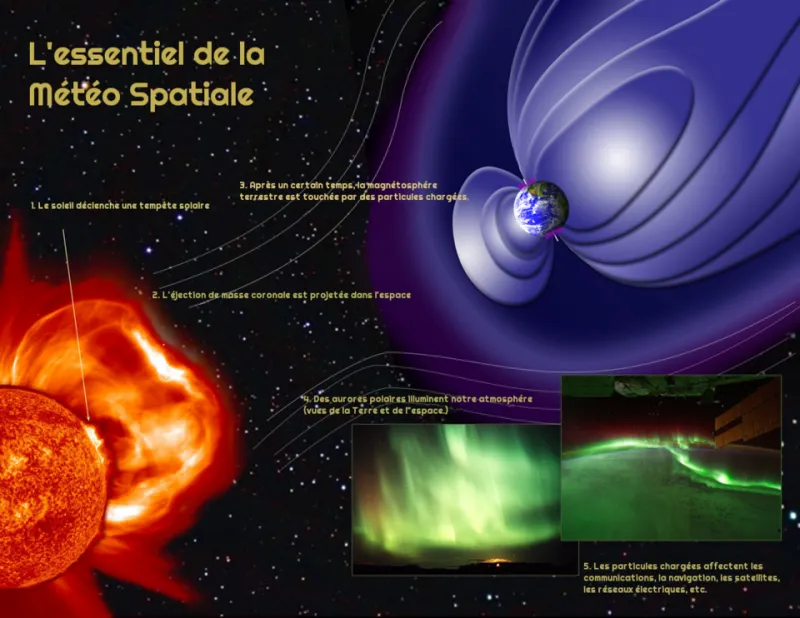
Photo: EV-Launch (traduction), CC BY-SA 4.0, via Wikimedia Commons
Imagine the next Carrington-scale event. A fast coronal mass ejection leaves the Sun on a Tuesday. Spacecraft tracking the solar wind pick it up roughly an hour before it reaches Earth. NOAA's forecasters issue a severe geomagnetic storm warning with an expected arrival window. Power utilities begin taking precautions. Satellite operators put their fleets into safe modes.
That is the quiet, competent version. Here is the version more likely to happen: within twenty minutes of the first G4 watch, the internet has decided the grid is going to fail for months, two viral videos show unrelated transformer explosions, and a trending hashtag claims the Sun is about to flip Earth's magnetic poles permanently.
A week of warning, and we still stumble
Solar storm forecasting is genuinely mediocre at predicting whether a flare will erupt, but it is genuinely good at something else: telling us that a CME is on the way. With a spacecraft at the L1 point upstream, forecasters get somewhere between 15 and 60 minutes of hard warning. With a coronagraph's view of the launch itself, days of lead time. There is time for plain-language briefings, for local officials to be told what to expect, for a coordinated statement about what will and will not happen.
We have not built the habit of using that time well.
The armchair forecasters are here to stay
This is not a complaint about enthusiastic amateurs — far from it. Citizen observers have contributed real value to solar science for centuries, and the current generation of hobbyists producing aurora reports and magnetometer plots is doing meaningful citizen science. The problem is scaling. When a major event hits, tens of thousands of people are looking at the same handful of charts without the interpretive context a trained forecaster carries.
The specific failure modes are predictable:
- Scale confusion. The Kp index and the G-scale are different animals. A Kp of 7 is a serious storm and also a very common one; readers who have never seen a Kp chart before interpret it as a doomsday number.
- Conflation. A solar flare and a CME are not the same event, and only one of them actually causes geomagnetic disruption at Earth. A flare producing a dramatic X-class headline may have no Earth-directed ejecta at all.
- Source laundering. Screenshots of half-explained forecast model output circulate without attribution, then get cited as authoritative because they look technical.
- Recycled hoaxes. The 'internet apocalypse' narrative resurfaces every few months with a new date attached, and every major storm gives it a fresh coat of paint.
Three ways the next one goes wrong
First, the grid panic problem. Geomagnetic storms have caused real grid trouble — the 1989 Quebec blackout is the canonical case — and modern utilities have hardening measures because of it. That story is underreported relative to the fantasy version in which a storm instantly fries every substation in North America. Utilities staring down a G4 event need the public to remain calm and leave grid operators to their jobs, not to create a run on generators.
Second, the aurora stampede. During the May 2024 G5 storm, aurora was visible far deeper into the US than usual, and large numbers of people chased it onto highways at night. The risk there is not the Sun. It is traffic. When every news outlet leads with 'northern lights visible in Texas tonight,' someone should also be mentioning road conditions and the fact that a phone camera will outperform your eyes.
Third, the credibility hangover. If the next big storm is overhyped and nothing happens — which is common, since CME timing and geomagnetic efficiency are both uncertain — the public learns to ignore the warnings. That is a genuine hazard. A population that has been cried wolf at ten times will not evacuate a launch site or pull a survey crew off a mountain on the eleventh.
What better communication actually looks like
Some of this is already good practice at NOAA's Space Weather Prediction Center, which publishes clear scale graphics, observes uncertainty ranges, and maintains forecast discussions written for professionals. The gap is in translation.
Concretely:
- Pre-write the explainers. The relevant newsrooms should have a vetted, plain-English piece ready to publish before the storm arrives, with the scale, the realistic effects, and the things that will not happen.
- Say the impact by region. 'HF radio degraded over the sunlit hemisphere' means nothing to a reader in Ohio. 'Your radio may fade in and out this afternoon; your GPS will be sloppier than usual; the grid is being watched; the aurora might reach your state' means something.
- Publish uncertainty, not prophecy. A forecast with a 70 percent chance of a G3 event is more useful and more credible than a confident declaration that turns out wrong.
- Coordinate the messenger. NOAA, NASA heliophysics, utilities, satellite operators, and airline dispatch should not be telling four different stories to four different audiences.
- Brief local TV. They are the ones your aunt watches. They need a two-minute script that does not treat the Sun as a horror movie villain.
None of this requires new science. It requires the acknowledgment that a solar storm is now a two-part event: the space weather, and the information weather. The second one reaches Earth instantly, and nobody has a forecast for it yet.
Infopunks of Sol covers the space between the Sun and your news feed. If you want the technical version of what actually arrives during a storm, our Solar Science and Space Weather categories are the place to start.