Ghost Logs and Broken Telescopes: The Messy Truth About Victorian Solar Science
Imagine you're trying to solve a cold case with evidence that was collected by someone who didn't know they were collecting evidence. The notes are in three different handwriting styles, half the measurements use units nobody bothered to define, and the key witness — a telescope built in 1847 — hasn't existed for over a century. That's more or less the situation facing solar physicists who need to understand what our star was doing before the 20th century.
The problem isn't just that old data is incomplete. It's that the data we do have is riddled with systematic errors that are extraordinarily difficult to untangle. And since solar cycles play out over decades, missing or corrupted historical records aren't a minor inconvenience — they're a fundamental obstacle to predicting what the Sun is going to do next.
What Victorian Astronomers Were Actually Working With
Let's give credit where it's due: the astronomers of the 1800s were often meticulous, dedicated, and genuinely passionate about the Sun. But they were also working with equipment and techniques that were, by modern standards, all over the map.
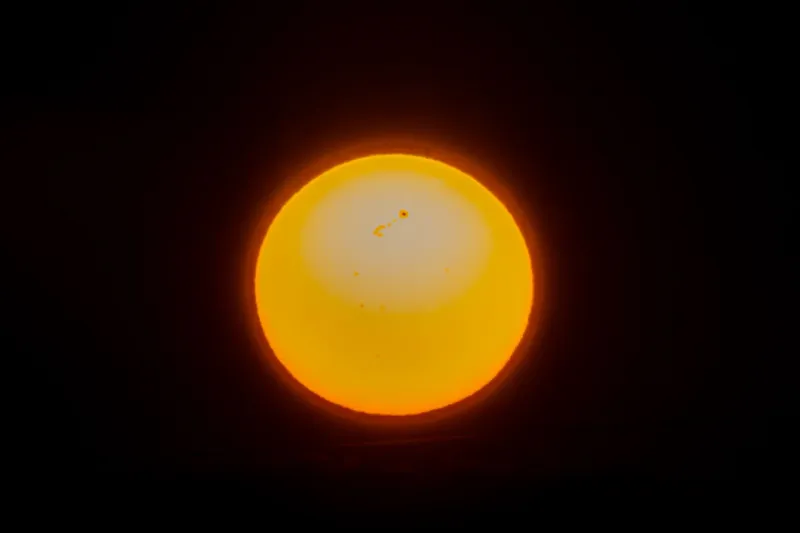
Sunspot observation — the bread and butter of historical solar monitoring — depended heavily on individual observers sketching what they saw through a telescope projected onto paper. The size of a sunspot group, the number of individual spots, the relative darkness of the umbra versus the penumbra — all of this was filtered through human perception, eyesight quality, artistic skill, and the specific characteristics of whatever telescope was being used that day.
Different observatories used different apertures, different projection distances, and different definitions of what even counted as a sunspot. A tiny pore that one observer recorded dutifully might be ignored entirely by another. On a hazy day in London versus a crystal-clear night in Madrid, the same sunspot group could look completely different through similar instruments.
Then there's the calibration problem. Modern instruments are cross-checked against each other constantly. In the 19th century, there was no global network, no standardized protocol, and often no way to verify whether one observatory's "large" sunspot matched another's. Some observatories changed their telescopes mid-record without noting the switch. Others had gaps of months or years with zero explanation.
The Wolf Number Rabbit Hole
Much of what we know — or think we know — about solar activity before 1900 flows through a single metric called the Wolf sunspot number, named after Swiss astronomer Rudolf Wolf, who spent decades in the mid-1800s trying to compile a coherent historical record. Wolf did something impressive: he hunted down old observations, assigned reliability weights to different sources, and stitched together a continuous dataset going back to Galileo.
The problem is that Wolf's methodology, while ingenious for its time, introduced its own layer of assumptions and corrections. He had to decide how much to trust each observer, how to bridge gaps, and how to reconcile wildly inconsistent counts. Those judgment calls are now baked into the historical record in ways that are nearly impossible to fully reverse-engineer.
Researchers revisiting the Wolf number in recent decades have found genuine discrepancies — places where the record appears to undercount or overcount activity based on cross-referencing with other proxies like aurora sightings, tree ring data, and ice core isotope ratios. The Maunder Minimum, that famous stretch of low solar activity from roughly 1645 to 1715, looks different depending on which reconstruction you trust. That's not a trivial disagreement. It has real implications for how we model solar variability and its effects on Earth's climate.
The Instrument Problem Nobody Talks About Enough
Beyond the human observer issue, there's a hardware problem that gets less attention than it deserves. Victorian-era telescopes weren't just less powerful than modern ones — they had optical characteristics that systematically distorted what observers saw.
Chromatic aberration, atmospheric dispersion, and lens quality variations all affected the apparent size and sharpness of sunspot features. When researchers today try to compare an 1870 sunspot sketch with a modern magnetogram, they're not just comparing different resolutions — they're comparing observations made through fundamentally different optical systems with different distortion profiles.
Some of these distortions can be modeled and partially corrected. But doing so requires knowing the exact specifications of equipment that often no longer exists, based on documentation that was sometimes lost, damaged, or never written down in the first place. It's forensic astronomy in the most literal sense.
The Salvage Operation
Despite all of this, researchers haven't given up on historical solar data — and for good reason. Even imperfect records contain real signal. The challenge is separating that signal from the noise.
One major effort involves digitizing and cross-referencing original observatory logbooks that have never been systematically analyzed. Institutions across Europe and the Americas are sitting on paper records from the 19th and early 20th centuries that were never entered into any digital database. Some of these logs contain daily sunspot drawings, positional measurements, and observer notes that could help fill gaps or catch errors in the canonical record.
Researchers are also applying modern statistical techniques to the problem — essentially building models that estimate the likely true solar activity given a set of noisy, inconsistent observations. It's similar to what epidemiologists do when they try to estimate disease prevalence from incomplete testing data. You can't know the exact number, but you can bound it and describe your uncertainty honestly.
Another promising avenue is the continued development of cosmogenic isotope proxies — the beryllium-10 and carbon-14 signatures preserved in ice cores and tree rings that track solar activity indirectly through cosmic ray flux. These proxies aren't perfect either, but they're physically independent of the observer problems that plague direct sunspot records. When the two datasets agree, confidence goes up. When they diverge, that's a signal worth investigating.
Why Any of This Matters Right Now
Here's the practical stakes: solar cycle prediction models depend on long baseline datasets to identify patterns and test hypotheses. If the historical record is systematically wrong in certain periods, models trained on that data will inherit those errors — and predictions about future cycle strength, duration, or behavior could be off in ways we don't fully appreciate yet.
With space weather increasingly relevant to satellite operations, power grid management, and astronaut safety, that's not an abstract concern. A miscalibrated understanding of how often extreme solar events occur — or how deep solar minima can get — feeds directly into infrastructure planning and risk assessment.
The Victorian astronomers who squinted through their eyepieces and sketched sunspots by hand weren't doing bad science. They were doing the best science their era allowed. The job now is to figure out exactly how much of what they recorded we can actually use — and to build the kind of global, standardized, redundant observation infrastructure that ensures the researchers of 2150 don't have to say the same thing about us.