The Long Dark Between Eclipses: America's 18-Year Wait for Totality
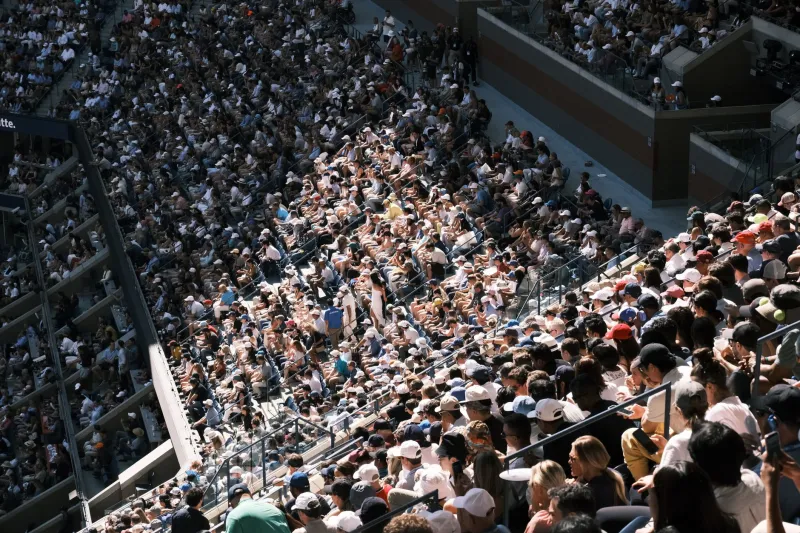
On April 8, 2024, millions of Americans looked up at the same time. From Texas to Maine, parking lots filled, schools handed out glasses, and local news anchors went quiet for three minutes while the Moon swallowed the Sun. It was, briefly, the biggest science event in the country.
Today, in 2026, the afterglow has faded. The next total solar eclipse to cross the contiguous United States doesn't arrive until August 23, 2044. That's not a typo. For most Americans, the Moon's shadow will not touch their backyard again for nearly two decades. The 2024 event is already sliding into memory, and the long eclipse drought is just beginning.
The Calendar Is Not the Problem
Eclipses are not rare on Earth. They happen somewhere roughly every 18 months. But they are rare here, over the piece of real estate where you happen to live, and that matters more than astronomers like to admit. A total solar eclipse is one of the few astronomical phenomena that requires no equipment, no training, and no patience with a telescope mount. You just stand outside and look. That accessibility is why it works as a gateway drug for science.
The problem is that the United States is about to lose its natural on-ramp. Partial eclipses will still happen. Annular eclipses will cross the country. But the full, jaw-dropping, corona-revealing experience — the one that makes people audibly gasp — is on a 20-year vacation from the lower 48.
What a Missing Eclipse Does to Citizen Science
Eclipse chasers are already planning trips to Spain, Egypt, and Australia. But the casual citizen scientist — the person who downloads an app, counts sunspots, or reports aurora sightings — is more likely to stay home. That's a quiet loss. Total eclipses create a spike of public engagement that researchers can actually measure: increased downloads of solar observation apps, spikes in amateur astronomy club sign-ups, and short-lived but real interest in heliophysics data.
During the 2024 eclipse, citizen science projects collected thousands of observations of the Sun's corona, local temperature drops, and animal behavior. Some of that data is genuinely useful. A 20-year gap doesn't just mean fewer eclipses. It means fewer of those accidental volunteers.
The Classroom Gap
Ask a science teacher about the 2017 and 2024 eclipses and you'll often hear the same story: kids who had never cared about space suddenly wanted to know how the Sun works. A total eclipse is a teachable moment that doesn't require a budget. The 2044 drought means an entire generation of students will move from kindergarten through high school without a total solar eclipse in their own sky.
That's not a reason to cancel science class. But it is a reason to plan. Schools in the path of future eclipses — parts of Montana, the Dakotas, and beyond — could start building eclipse curricula now. Museums and planetariums could treat the drought as a reason to invest in solar telescopes and safe viewing equipment instead of waiting for the next headline.
Heliophysics Loses a Natural Laboratory
For solar physicists, eclipses are not just pretty. They offer a rare view of the Sun's lower corona from the ground, without the overwhelming glare of the solar disk. Space-based observatories do this better in many ways, but eclipses still provide calibration opportunities and public-facing moments that pure research missions struggle to match.
The drought also creates a political problem. Heliophysics funding is already a tough sell compared with missions that promise planets or black holes. A 20-year absence of total eclipses over the US doesn't help. The public's attention is a finite resource, and the Sun is very good at becoming background noise.
Treating the Drought Like Infrastructure
We don't need to panic about 2044. We do need to treat the gap as a planning problem. That means funding solar outreach now, not in 2043. It means making sure schools and libraries have certified solar filters and pinhole projectors for partial eclipses. It means supporting amateur astronomy clubs that keep the flame alive between the big events. And it means reminding people that the Sun is worth watching even when the Moon isn't photobombing it.
Eighteen years is a long time in public attention and a short time in institutional planning. If we wait until the next eclipse to care about solar science, we'll waste the very years when we could be building the audience for it. The drought is coming either way. The question is whether we use it or just endure it.