The Shape of a Solar Disaster: Why Magnetic Geometry Matters More Than Raw Power
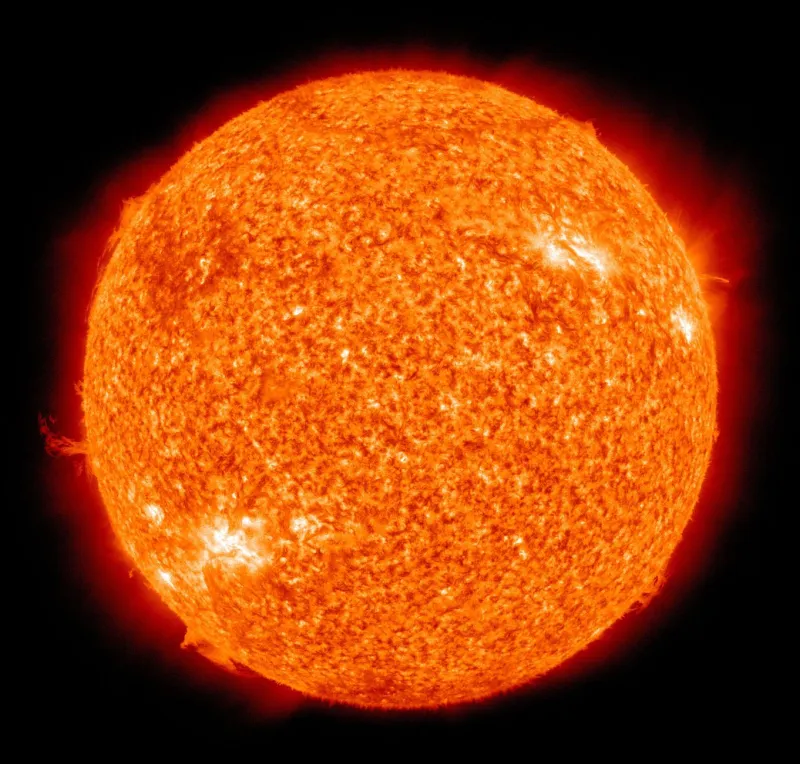
Here's something that should keep solar physicists up at night: two flares can erupt from the same active region, carry nearly identical energy signatures, and produce wildly different outcomes. One dissipates harmlessly into the heliosphere. The other slams into Earth like a freight train, triggering geomagnetic storms that knock out satellites and light up the sky with auroras as far south as Texas. Same neighborhood. Same power. Completely different consequences.
For decades, the working assumption was that stronger meant more dangerous. Track the magnetic field strength, watch the sunspot clusters, and you'd have a rough sense of what was coming. That approach wasn't wrong exactly — it just turned out to be deeply incomplete. The real story isn't about how much magnetic energy is stored in a solar region. It's about the shape of the field lines holding that energy in place.
Topology: The Word That's Changing Everything
In mathematics, topology is the study of properties that survive deformation — the way a coffee mug and a donut are technically the same shape because each has one hole. In solar physics, magnetic topology refers to how field lines are arranged, connected, and — critically — where they're most likely to break.
This isn't just abstract geometry. The configuration of magnetic field lines in an active region determines how energy builds, how it releases, and whether an eruption can escape the Sun's gravitational grip or gets snuffed out before it fully launches. Two regions with identical field strengths but different topological structures will behave completely differently when they finally snap.
Researchers have identified specific topological features that seem to serve as launching pads for the most violent eruptions. Structures called hyperbolic flux tubes — essentially tangled intersections where field lines from different polarities converge — are now considered prime suspects in the chain reaction that separates a forgettable flare from a civilization-level space weather event.
Mapping the Invisible Architecture
The challenge is that you can't see magnetic topology directly. You can measure the strength and direction of magnetic fields at the solar surface using instruments called magnetographs, but translating those surface measurements into a three-dimensional picture of what's happening above the photosphere requires serious computational muscle.
This is where modern solar physics has made genuine leaps forward. Teams at institutions like NASA's Goddard Space Flight Center and the National Solar Observatory have been developing models that extrapolate surface field data into full 3D reconstructions of active region topology. The results are sometimes startling. Regions that looked unremarkable based on standard magnetic field maps turn out to have deeply complex topological structures — twisted flux ropes coiled like springs, ready to unload.
One particularly useful diagnostic tool involves identifying quasi-separatrix layers, or QSLs. These are zones where the connectivity of field lines changes sharply over short distances. Think of them as fault lines in the magnetic architecture. When energy builds up and field lines start to reconnect, QSLs are where things tend to get violent. And crucially, not every QSL is created equal — their specific geometry influences whether the resulting eruption stays confined or goes full coronal mass ejection.
Confined Versus Eruptive: The Question That Actually Matters
Not every solar flare launches a CME. Some flares are confined — they release energy locally, brighten dramatically on the Sun's surface, and then the whole thing settles down without sending a billion-ton plasma cloud into space. Others are eruptive, and those are the ones that can cause real problems for anything in the solar system with a power grid or a circuit board.
For years, predicting which category a given flare would fall into was basically educated guesswork. Researchers knew that the strength of overlying magnetic field loops — the so-called strapping field — played a role in whether an eruption could punch through and escape. But the same strapping field could behave differently depending on the topological configuration of what it was holding down.
Recent work has started to quantify this relationship more precisely. Studies analyzing solar events captured by NASA's Solar Dynamics Observatory have found that certain topological metrics — particularly the decay index of the overlying field combined with the complexity of the QSL structure beneath it — correlate strongly with whether a flare goes eruptive. It's not a perfect formula yet, but it's a genuine improvement over purely strength-based assessments.
Why This Matters Right Now
We're sitting inside Solar Cycle 25, which has been running hotter than most forecasters expected. Active regions have been popping up with impressive frequency, and some of them have produced significant flares. The gap between "impressive flare" and "direct Earth hit from a major CME" is exactly the kind of gap that magnetic topology research is trying to close.
For the power grid operators, satellite companies, and government agencies that need to make real decisions based on space weather forecasts, the difference between a confined flare and an eruptive one isn't academic. A false alarm costs money and credibility. A missed warning costs a whole lot more.
The ultimate goal is to build topology analysis into operational forecasting pipelines — essentially giving forecasters a structural readout of an active region's eruption potential before anything happens. Several research groups are already prototyping systems that could do exactly that, combining near-real-time magnetogram data from SDO with automated topology extraction algorithms.
The Honest Limitations
None of this is solved yet. Magnetic topology modeling is computationally expensive, and the extrapolations from surface measurements to coronal structure involve assumptions that don't always hold. The Sun has a way of violating assumptions.
There's also the question of how much lead time any topology-based system can realistically provide. Field line configurations can evolve rapidly in active regions — sometimes within hours. A topology that looks stable at breakfast can look catastrophic by lunch. Getting useful warnings out ahead of eruptions, rather than explaining them after the fact, remains the hard part.
But the direction of travel is clear. The scientific community is increasingly convinced that raw magnetic strength is only part of the story, and that the geometry — the invisible architecture underlying every active region — is where the real predictive power lives.
The Sun has always been more complicated than it looks from 93 million miles away. The shape of its magnetic field lines might finally be the key to reading what it's planning next.