The Quiet Sun Is Lying to You: Why Solar Minimum Is Weirder and Scarier Than Anyone Warned
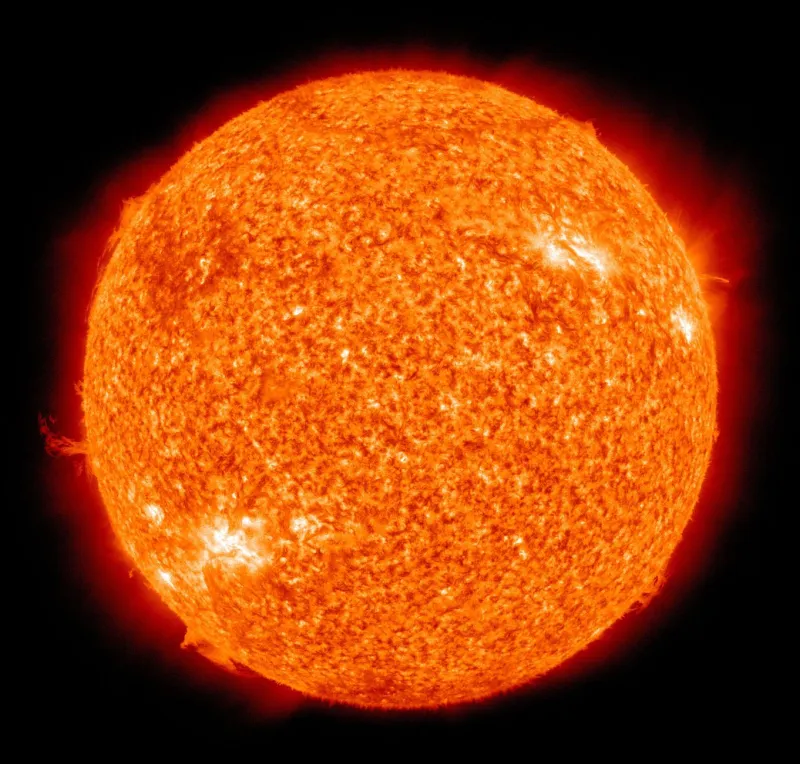
There's a comforting story we tell ourselves about the Sun during solar minimum. Fewer sunspots. Fewer flares. Fewer headlines about geomagnetic storms threatening power grids or GPS satellites. The star at the center of our solar system, we're told, is essentially taking a breather — and that means we can too.
That story is wrong. Or at least, it's dangerously incomplete.
Space weather forecasters and solar physicists have spent years trying to correct a stubborn public misconception: that a quiet Sun is automatically a safe one. The reality is messier, more counterintuitive, and in some ways more unsettling. When the Sun dials back its activity, a different set of risks quietly fills the vacuum — some of them potentially worse than anything a mid-cycle flare could throw at us.
The Sun Steps Back, and Something Else Steps In
Here's the piece of physics that tends to get lost in the conversation. The Sun's magnetic field doesn't just influence solar flares and coronal mass ejections — it also acts as a kind of shield for the entire inner solar system. During solar maximum, when the Sun's magnetic activity is cranked up and its field is robust and complex, that field pushes back against the constant rain of galactic cosmic rays (GCRs) streaming in from deep space.
When solar minimum arrives and the Sun's magnetic output drops, that shield weakens. GCRs — high-energy particles accelerated by supernovae and other violent events billions of light-years away — have a much easier time penetrating the heliosphere and reaching Earth's atmosphere.
This isn't a theoretical concern. Neutron monitors on the ground, which act as ground-level detectors for these particles, consistently record elevated GCR counts during solar minimum. Some of the highest cosmic ray intensities ever measured were recorded during the unusually deep minimum between Solar Cycles 23 and 24, roughly between 2008 and 2009. That particular minimum was so prolonged and so quiet that researchers were genuinely uncertain when — or whether — the Sun would pick back up.
"The heliospheric magnetic field basically compresses inward during minimum," explains the general scientific consensus among space weather researchers. "That means less protection from the stuff coming at us from outside the solar system."
What Cosmic Rays Actually Do
So galactic cosmic rays go up during solar minimum. Why should anyone in, say, Omaha or Phoenix care about particles streaming in from distant corners of the galaxy?
For starters, GCRs are genuinely ionizing radiation. At ground level, their effects are minor — Earth's atmosphere absorbs most of the punch. But at cruising altitude for commercial aircraft, roughly 30,000 to 40,000 feet, the shielding is considerably thinner. Frequent flyers and flight crews accumulate measurable radiation exposure, and during solar minimum, that exposure ticks upward. The FAA and aviation health researchers have been tracking this for years, though it rarely makes the news cycle.
At higher altitudes — aboard the International Space Station, for example, or in any future crewed mission to the Moon or Mars — the risk is substantially more serious. Astronauts during solar minimum face elevated GCR exposure precisely when solar flare activity seems least threatening. It's a paradox that mission planners have to actively account for: the "safe" part of the solar cycle isn't actually safe in space.
There are also ongoing debates in atmospheric science about whether GCRs influence cloud formation at the lower levels of Earth's atmosphere, which would have downstream effects on climate. The science here is still contested and nuanced, but the conversation itself reflects how wide-ranging the effects of solar minimum can be.
The Rogue Burst Problem
Here's where the danger gets even more counterintuitive. During solar minimum, the Sun's magnetic field doesn't just weaken — it simplifies. The tangled, complex magnetic structures that define solar maximum give way to a more organized, dipole-like configuration. That sounds like it should mean fewer surprises.
But space weather forecasters will tell you that solar minimum comes with its own brand of unpredictability. The Sun isn't completely dormant. It still produces flares and the occasional coronal mass ejection — and when it does, those events can be harder to anticipate precisely because they emerge from a system that everyone's been watching less carefully.
More importantly, during solar minimum, Earth's magnetosphere is in a different baseline state. The magnetosphere responds to changes in solar wind pressure and magnetic field orientation, and during the quieter periods, it can actually become more sensitive to certain kinds of disruptions. A modest CME that might barely register as a news item during solar maximum can trigger a disproportionate geomagnetic storm when it arrives during minimum, partly because the magnetosphere is operating under different conditions.
This is one of the reasons space weather forecasters genuinely dislike the framing of solar minimum as "the calm before the storm." It implies the danger is all in the future, waiting on the other side of the minimum. In reality, the minimum is its own operational environment with its own risks.
The Forecasting Blind Spot
One of the less-discussed consequences of solar minimum is what it does to the forecasting community's attention and resources. When sunspot counts drop and flare alerts become rare, public interest fades. Funding conversations get harder. The urgency that drives solar observation during active periods is harder to sustain when the Sun looks boring from the outside.
But the infrastructure that space weather threatens — power grids, satellite networks, GPS systems, high-frequency radio communications — doesn't take a break during solar minimum. It's operating around the clock, and in some respects it's more vulnerable during minimum because the systems designed to warn operators about incoming storms are tuned for the more dramatic events of solar maximum.
A mid-level event during minimum can slip through with less warning time and less preparedness, simply because everyone's guard is down.
Rethinking What "Quiet" Means
The framing problem here is partly linguistic. "Minimum" implies a low point, an absence, a rest. And compared to the chaotic magnetic fireworks of solar maximum, that's technically accurate. But nature doesn't actually stop doing things just because one variable drops.
What solar minimum really represents is a shift in which risks are dominant. The big, dramatic threats — X-class flares, major CMEs, sudden radio blackouts — recede. But the slower, more diffuse threats move to the foreground: elevated cosmic ray exposure, a more vulnerable magnetosphere, reduced forecasting vigilance, and the occasional rogue burst that catches everyone off guard.
For anyone tracking what the Sun is doing to Earth's technological and biological environment, solar minimum isn't a vacation. It's a different kind of workday — quieter on the surface, but with its own set of problems that don't announce themselves with the same fanfare.
The Sun, as it turns out, doesn't really have an off switch. It just changes what it's doing when we're not paying attention. And that might be exactly when it's most worth paying attention.