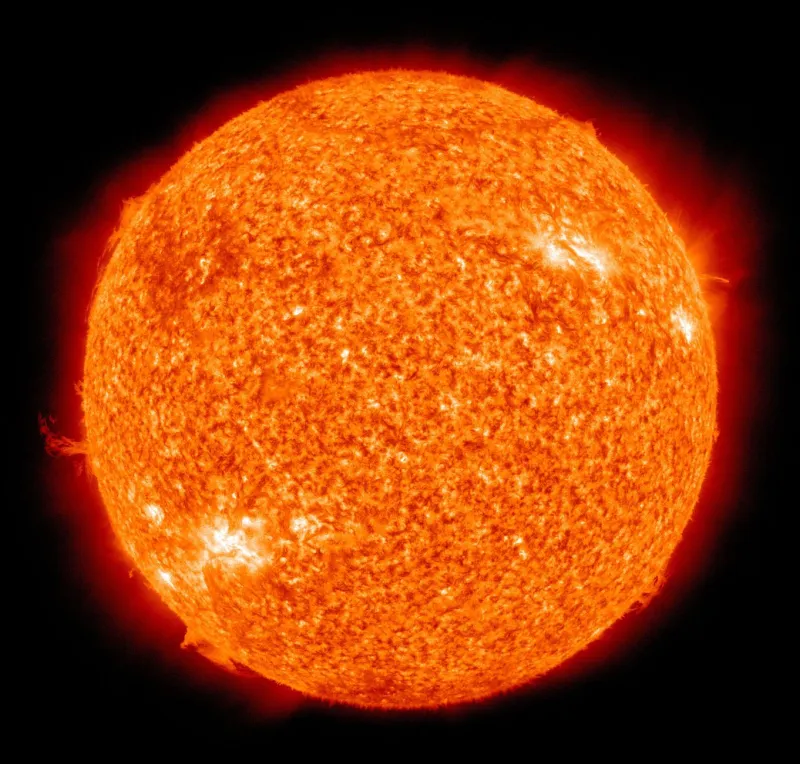
Riding the Solar Storm: How Scientists Want to Turn the Sun's Rage Into a Cosmic Postal Service
For decades, solar eruptions have been cast as the villains of space weather — grid-frying, satellite-scrambling menaces we scramble to predict and dodge. But a growing group of researchers is flipping that script entirely, asking a genuinely wild question: what if the Sun's most violent outbursts could carry information instead of just chaos?
It sounds like something out of a sci-fi paperback you'd find at a yard sale, but the science behind it is real, increasingly funded, and quietly reshaping how engineers think about deep-space communication. The idea isn't to cause solar eruptions on demand — we're nowhere near that kind of stellar puppetry. Instead, it's about learning to read what the Sun is already broadcasting and, eventually, to synchronize with it.
What the Sun Is Already Saying
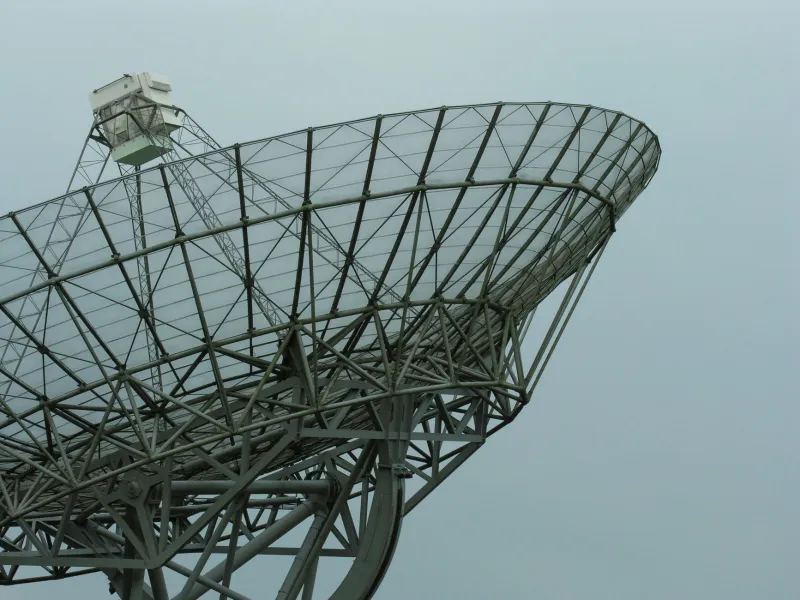
Every time the Sun unleashes a coronal mass ejection (CME) or fires off a solar radio burst, it sends an enormous pulse of electromagnetic energy rippling outward through the solar system. These bursts aren't random noise. They carry structure — frequency patterns, polarization signatures, timing intervals — that scientists have been cataloging for decades using radio telescopes and solar observatories.
Type II and Type III solar radio bursts, for instance, are generated when fast-moving electrons spiral along magnetic field lines and emit radiation at very specific frequencies. Researchers have mapped these signatures so thoroughly that they can now fingerprint an individual burst and trace it back to its origin point on the Sun's surface with surprising precision. That level of structural detail is exactly what makes some scientists think there's a communication angle worth pursuing.
The logic goes like this: if a natural event produces a detectable, structured, predictable signal that travels at or near the speed of light across interplanetary distances, you have the basic skeleton of a communication channel. The Sun, whether it means to or not, is already doing the hard part.
From Threat Assessment to Signal Engineering
The pivot from "how do we protect against this" to "how do we use this" didn't happen overnight. It's been building quietly in the margins of heliophysics research for years, accelerating as NASA and private aerospace companies started getting serious about crewed Mars missions.
Here's the core problem those missions face: radio communication between Earth and Mars suffers from a brutal delay. Depending on where the two planets sit in their orbits, a signal can take anywhere from three to twenty-two minutes to make the one-way trip. For emergency situations — a medical crisis, a systems failure, a decision that needs to happen now — that lag is potentially catastrophic.
Conventional solutions involve more powerful transmitters, larger antenna arrays, and better error-correction algorithms. All of that is valuable. But some researchers are exploring whether solar radio phenomena could serve as a kind of natural amplifier or synchronization backbone — a way to use the Sun's own electromagnetic infrastructure to enhance signal reliability across the inner solar system.
The concept is still largely theoretical, but it draws on very real physics. Solar radio bursts can propagate across the entire heliosphere. A signal piggybacked onto or synchronized with a natural solar emission would, in theory, travel farther and with less degradation than a standalone transmission from a spacecraft's relatively puny antenna.
Reading the Noise for Something Useful
The trickier part of this whole project is encoding. Natural solar bursts are chaotic in their fine-grained structure even when they're predictable in their broad patterns. To use them as a communication channel — even a passive one — you'd need to develop a kind of translation layer: software and hardware capable of extracting a human-generated signal from the background roar of solar activity.
This is where machine learning has entered the conversation in a big way. Several research groups, including teams affiliated with university heliophysics programs and a handful of European Space Agency-adjacent projects, are training neural networks on massive archives of solar radio data. The goal isn't just classification — it's learning the Sun's electromagnetic "grammar" well enough to spot anomalies that might carry encoded information, or to identify natural signal windows where a transmitted message could ride with minimal interference.
Think of it like learning to have a conversation in a very loud bar. You don't eliminate the noise. You learn to work with it, finding the frequencies and timing windows where your voice cuts through.
The Interstellar Angle
Push the concept even further out — past Mars, past the asteroid belt, toward the outer planets and beyond — and the idea gets both more ambitious and more speculative. Researchers thinking about communication with interstellar probes like a hypothetical successor to Voyager face a signal attenuation problem that makes the Mars delay look quaint. By the time a radio signal reaches the heliopause and beyond, it's degraded to a whisper.
Some physicists have proposed that the Sun's gravitational lens — a focal point roughly 550 astronomical units out, where the Sun's gravity bends and amplifies light and radio waves — could serve as a natural relay station of almost absurd power. A probe positioned at that focal point could theoretically transmit back to Earth with an effective antenna gain that dwarfs anything humans have ever built. The solar radio burst research feeds into this larger architecture: understanding how the Sun's electromagnetic environment behaves at every scale is a prerequisite for designing systems that work with that environment rather than fighting it.
Why This Matters Right Now
NASA's current solar maximum — we're sitting deep in Solar Cycle 25, which has been punching well above its predicted weight — has given researchers an unexpected gift: more solar radio events to study than anyone anticipated. The cadence of CMEs and radio bursts over the past two years has been high enough that data collection has accelerated dramatically.
That timing isn't lost on the people working in this space. More events mean more data. More data means better models. Better models mean a clearer picture of which solar signals are genuinely usable as communication infrastructure and which are just spectacular noise.
The traditional framing — solar activity as a threat to be mitigated — isn't going away. Power grid operators, satellite companies, and airline route planners absolutely still need accurate space weather forecasting. But the emerging parallel narrative is genuinely exciting: the Sun as infrastructure, its eruptions as raw material for something humanity hasn't built yet.
The Long Game
Nobody is claiming we'll be routing Mars mission telemetry through a CME by 2035. The engineering challenges alone are formidable, and the theoretical framework still has significant gaps. But the direction of travel is clear enough. A generation of researchers is learning to see solar violence not just as a hazard to manage but as a resource to understand deeply enough, eventually, to use.
For a website called Infopunks of Sol, there's something almost poetic about that. The Sun has always been broadcasting. We're just finally starting to figure out how to listen — and maybe, one day, how to write back.