Solar Scapegoat: Separating the Sun's Real Historical Crimes From the Ones We Made Up
There's a version of solar history that reads like a highlight reel of catastrophe. Telegraphs bursting into flames. Rivers freezing solid across Europe. Compasses spinning like broken toys on sailing ships. The Sun, in this telling, is a recurring villain in the human story — a star that occasionally loses its temper and sends civilization scrambling.
Some of that is real. Some of it is speculation dressed up in scientific language. And a surprisingly large chunk of it is mythology that got laundered through enough academic papers to start sounding like fact.
Let's sort through the wreckage.
The Carrington Event: The One That Actually Happened
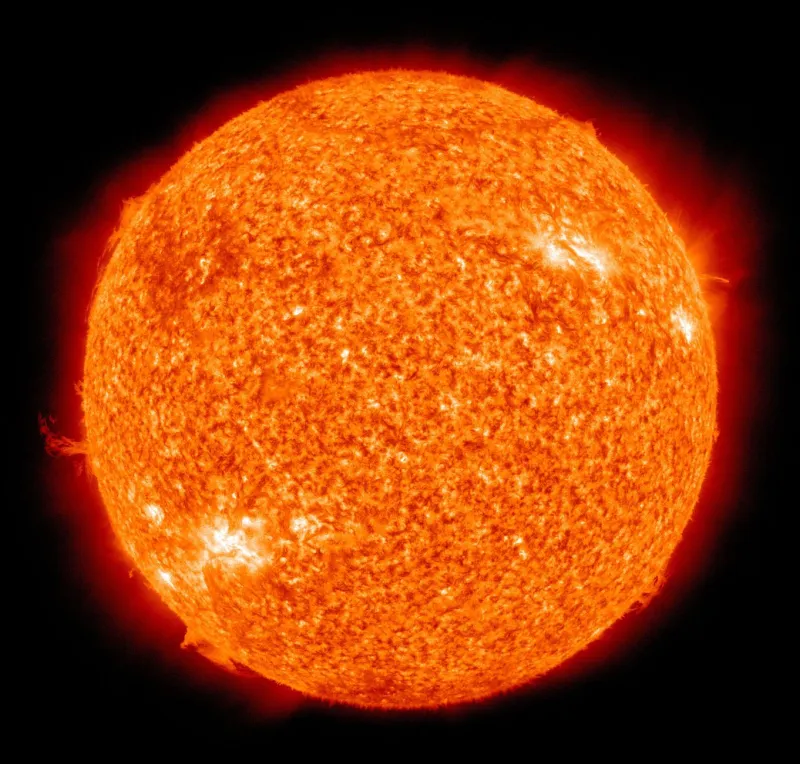
If you spend any time reading about space weather, you've heard of the Carrington Event. In September 1859, a massive solar flare and coronal mass ejection slammed into Earth's magnetic field with enough force to trigger auroras visible as far south as Cuba and Hawaii. Telegraph operators across the United States and Europe reported their equipment sparking, shocking them, and in some cases catching fire. A few operators reportedly disconnected their batteries and ran the telegraph lines on induced current from the geomagnetic storm alone.
This one is well-documented. The scientific record is solid. Richard Carrington himself observed the associated solar flare — one of the first direct human observations of such an event — and the correlation between that observation and the subsequent geomagnetic chaos is about as clean as 19th-century science gets.
The Carrington Event is the gold standard of solar-historical impact, which is exactly why it gets invoked constantly, sometimes to justify claims that are far shakier.
The Maunder Minimum and the Little Ice Age: Where It Gets Complicated
Here's where things get murky. Between roughly 1645 and 1715, sunspot activity dropped to near-zero levels. This period — named after astronomer Edward Maunder, who identified the pattern decades later — coincided with some of the coldest temperatures recorded in the last millennium across the Northern Hemisphere. Rivers that don't freeze today were hosting ice fairs in London. Glaciers advanced in the Alps. Crop failures contributed to famines across Europe.
The temptation to connect these two facts is completely understandable. Fewer sunspots, less solar output, colder Earth. Clean story, right?
Not quite. The actual reduction in solar output during the Maunder Minimum is estimated at somewhere between 0.1% and 0.3%. Climate models suggest that's enough to nudge global temperatures down by maybe 0.3 to 0.5 degrees Celsius — real, but not nearly enough to explain the severity of the Little Ice Age on its own. Volcanic eruptions, ocean circulation shifts, and land use changes all appear to have contributed significantly. The Sun probably played a supporting role, not the lead.
This distinction matters because the Maunder Minimum gets cited constantly as proof that solar variability drives climate. It's a partial truth inflated into something bigger than the data supports.
The 1989 Quebec Blackout: Modern Confirmation
Skipping ahead to more recent, well-documented territory: in March 1989, a geomagnetic storm knocked out the Hydro-Québec power grid in under two minutes, leaving six million people without electricity for up to nine hours. This is one of the clearest modern examples of a solar event causing direct, measurable infrastructure damage in the United States and Canada.
The mechanism is straightforward. Geomagnetically induced currents — essentially the same phenomenon that made those Victorian telegraphs go haywire — can overwhelm modern power grid transformers that aren't designed to handle DC surges. The Quebec event is frequently used in engineering discussions about grid hardening, and for good reason. It's a clean, unambiguous data point.
Interestingly, it's also less famous than the Carrington Event despite being more recent and more directly relevant to modern infrastructure vulnerabilities. The 19th-century story just tells better.
Viking Navigation and Solar Myths
Here's a popular one: Viking navigators supposedly used "solar stones" — calcite crystals known as Iceland spar — to locate the Sun through heavy cloud cover, allowing them to navigate the North Atlantic even during overcast conditions. The solar angle here is that understanding the Sun's position was so critical to Norse exploration that they developed special technology to track it.
The crystal navigation story is fascinating, and there's genuine research suggesting it's plausible. But the leap from "plausible" to "they definitely did this and it changed history" is substantial. We have no direct historical record of Norse sailors describing this technique in detail. The evidence is largely experimental — modern tests showing the crystals could work — rather than archaeological proof that they did work at scale.
It's a compelling hypothesis. It's not a documented historical impact of solar science on civilization.
The Dots We Keep Connecting Wrongly
There's a broader pattern worth naming. Humans are exceptionally good at finding correlations between solar activity and earthly events — and then forgetting to check whether those correlations hold up statistically.
Over the last century, solar cycles have been blamed (with varying degrees of rigor) for stock market fluctuations, epidemic cycles, geopolitical instability, and agricultural yields. Some of these connections have real mechanistic explanations. Most of them are pattern-matching dressed up as causation.
The sunspot cycle is roughly 11 years. A lot of things happen on roughly 11-year cycles, or can be massaged into looking like they do. That's not solar science — that's confirmation bias with a telescope.
What the Evidence Actually Supports
So what's the defensible list? Solar events that demonstrably, documentably affected human civilization?
The Carrington Event and its telegraph disruptions are real. The 1989 Quebec blackout is real. The 1972 solar storm that triggered accidental detonation signals in US Navy magnetic mines off North Vietnam — less famous, but documented — is real. Disruptions to radio communications during major flares throughout the 20th century are real and well-logged.
Solar influence on climate over geological timescales is real, though the magnitude is consistently smaller than solar enthusiasts tend to claim and consistently larger than solar skeptics are willing to admit.
Everything else — the ice fairs, the Viking crystals, the stock market cycles — lives somewhere on a spectrum between "plausible but unproven" and "retrofitted mythology."
Why It Matters That We Get This Right
This isn't just academic score-keeping. How we understand the Sun's historical impact directly shapes how we prepare for future solar events. If we overestimate what the Sun has done to us in the past, we might funnel resources toward the wrong threats. If we underestimate it — dismissing documented events as fringe concerns — we leave critical infrastructure exposed.
The Carrington Event is a genuine benchmark for worst-case solar scenarios. The Maunder Minimum is a genuine (if modest) data point about solar-climate relationships. Both deserve to be taken seriously on their actual merits, not inflated into mythology or deflated into irrelevance.
The Sun has a real record of messing with human civilization. It's interesting enough without the embellishments.